

Mississippi parents and community groups are building a model of dignity, trust and food security from the ground up.
On a chilly February morning in Jackson, dozens of parents, community members and advocates filled the marble halls of the Mississippi Capitol for Springboard to Opportunities’ annual Capitol Day. We were there, once again, to deliver a simple message: Every child deserves access to enough food to eat, especially in the coming summer months when school meals disappear.
For three years now, the state of Mississippi has chosen to opt out of Summer EBT, now called SUN Bucks, which is a federally funded program that would provide an additional $120 in grocery benefits per child to families who qualify for free and reduced lunches. The decision means that this summer, 324,000 Mississippi children will go without these benefits—joining more than 9 million kids nationwide who are left hungry because of political choices, not policy gaps.
At Springboard, we couldn’t stand by and let that happen.
For the past two summers, our organization has stepped in with our own summer cash program to fill the gap. We provided direct cash assistance to families, trusting them to make the best choices for their children.
The results speak for themselves: More than 85 percent of families reported no barriers to accessing enough food, and nearly as many said they were able to buy more protein, fresh fruit and vegetables than ever before.
We’ve shown that this model works. All it would take for Mississippi to extend that success statewide is a governor’s yes, a simple decision to opt into a federal program that would cost the state next to nothing in administrative funds. Yet again this year, Gov. Reeves declined, insisting that summer feeding sites and existing benefits are enough. Families have told us, loud and clear, that they are not.
At this year’s Capitol Day, alongside the frustration ran a current of resolve. We met with legislators, shared data and celebrated bipartisan progress on the Mississippi Farm and Food Security Act of 2026, a bill designed to strengthen local food systems and create a commission to review how the state feeds its children during the summer months.
The full bill didn’t clear every hurdle, but advocates are committed to keeping key parts of it moving; and that movement matters. In Mississippi, progress is always slow and hard-won. But we’re encouraged that leaders from both sides of the aisle are starting to see that parents are the experts on their families’ needs, and that approaches to food security that preserve dignity and choice are what work best. Though the bill won’t pass in its original form, the work it represents continues. Legislators are exploring ways to fold its key provisions into other bills. Our partners are ensuring that this food security commission, if created, includes experts ready to listen to families’ lived experiences and our data from the summer cash program.
Every child deserves access to enough food to eat, especially in the coming summer months when school meals disappear.
As we mark Black History Month, we’re reminded that the story of food insecurity in Mississippi, and across this country, is also a story about structural racism. Generations of discriminatory policy and disinvestment have left Black families more vulnerable to hunger, even as they work tirelessly to provide for their children. In Mississippi, Black households are far more likely to rely on SNAP benefits to make ends meet, meaning that every time the state refuses a federal program like SUN Bucks, it’s Black children who bear the brunt. Honoring Black history requires working toward true liberation for Black Americans, and committing to build systems that finally deliver equity, not excuses.
Martin Luther King Jr. reminded us that “the arc of the moral universe is long, but it bends toward justice.” That arc does not bend on its own, it is shaped by the will of ordinary people who keep showing up, again and again, even when the policy isn’t there yet.
Across the country, families and community-led groups are driving the same kind of persistent, local action. From Jackson to Minneapolis to Portland, grassroots organizers are mobilizing the public to stand up to injustice in historic numbers. They’re offering not just services, but proof of concept, which are living examples of what it looks like when we invest trust and resources directly in communities.
When change feels slow, as it often does these days, moments like Capitol Day reminds us that being present is its own declaration of hope. Forty advocates stood in Mississippi’s Capitol this year with the same message we’ve carried all along: Every family deserves the resources they need to feed their children.
And until that message is reflected in Mississippi’s laws, we’ll keep showing up, again next session, next summer and every day in between.
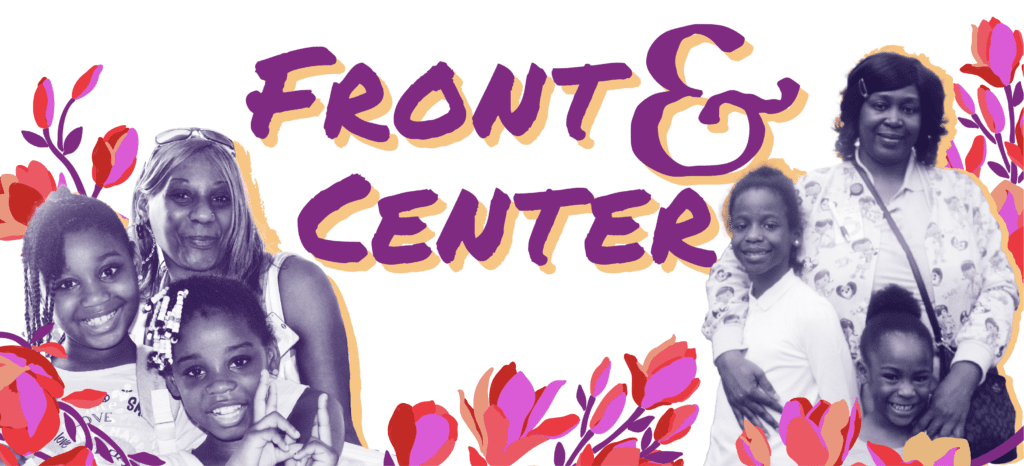
You may also like: Front & Center, Ms.’ groundbreaking series in collaboration with Springboard to Opportunities, in which Black women navigating social safety net programs share about their struggles, their children, their work, their relationships and their dreams for the future.
Great Job Sarah Stripp & the Team @ Ms. Magazine for sharing this story.