

Weekend Reading on Women’s Representation is a compilation of stories about women’s representation in politics, on boards, in sports and entertainment, in judicial offices and in the private sector in the U.S. and around the world—with a little gardening and goodwill mixed in for refreshment!
Milestones: Jocelyn Bell Burnell discovered pulsar, a rapidly rotating neutron star (1967); Loretta Lynch became the first African American woman to serve as U.S. Attorney General (2015); Frances Perkins, appointed secretary of labor (1933), U.S. Supreme Court upholds the 19th Amendment, guaranteeing women the right to vote (1922); Charlotte E. Ray becomes first woman graduate of Howard University School of Law, and the first female African American lawyer (1872); and Ngozi Okonjo-Iweala becomes the first woman and first African to lead the World Trade Organization (2021).
Birthdays: Ann Hendrix-Jenkins; Lois Romano, journalist; Linda Ryden, D.C. peace educator; Chelsea Handler, comedian and activist; Téa Leoni, actor; Liz Berry, Washington state representative; Jane Swift, former governor of Massachusetts; Paula Zahn, journalist; A’shanti Gholar, president of Emerge America; Nancy Vaughan, mayor of Greensboro, N.C.; Marian Anderson, first Black woman member of the New York Metropolitan Opera (1897) who performed at the Lincoln Memorial on April 9, 1939, at an event (attended by my mother and grandmother) organized by Eleanor Roosevelt after the Daughters of the American Revolution blocked her from singing at Constitution Hall; Suzanne Crouch, lieutenant governor of Indiana; Emma Petty Addams, co-executive director of Mormon Women for Ethical Government; Selvena Brooks-Powers, NYC councilwoman; Frieda Edgette, founder of Courage to Run; and Anne Tolstoi Wallach, author of Women’s Work (1929).
Democracy Solutions Summit: Join Our Three-Day Online Summit of Women Political Experts and Leaders
As we prepare for this year’s Democracy Solutions Summit (March 10-12 from 3-5 p.m. ET), I keep returning to a simple idea: Democracy is not self-executing. It does not expand or contract on its own. It evolves because people shape it through laws, institutions, culture and the incentives we embed into our political systems over time. That is why we structured this year’s Summit around three interconnected days focusing on where we’ve been, where we are and where we’re going. It felt like the most honest way to approach this moment—not as a single crisis or a single breakthrough, but as part of a longer arc.
.png "Democracy Is Not Self-Executing: How We Shape a Better Government Through Laws, Institutions and Culture")
We begin by grounding ourselves in history to understand the many ways trailblazing women have paved the way for us to walk on today. The Voting Rights Act did not simply symbolize progress; it structurally expanded representation. The Equal Rights Amendment continues to challenge us to define equality in constitutional terms. The infrastructure built in the wake of the “Year of the Woman” did more than elect candidates; it reshaped pathways into power. These were not isolated milestones, but were design decisions that altered who could lead and how.
From there, we turn to the present. We examine political violence not as a string of isolated incidents, but as a structural barrier. We assess institutional trust and the strength of leadership pipelines. We look beyond our borders to understand how other democracies have structured representation differently, and what lessons remain available to us. If we are serious about strengthening democracy, we must be willing to look clearly at the conditions shaping it today.

And then we turn to what comes next. On our final day, we will speak directly with leaders in the democracy reform movement and with elected officials navigating institutions in real time. Members of the Democratic Women’s Caucus will join us to discuss their Better Future Agenda and what it means to translate values into policy. We will hear from those building pipelines, shaping legislation and rethinking what durable representation truly requires.
We will also make space for something equally essential: hope. This year includes a special feature that centers on the next generation and reminds us that the future of democracy is not abstract. A new way of leading is already forming in the expectations we set, the systems we reinforce and the leadership we choose to cultivate.
Because ultimately, the forward-looking question is not only about policy, but about power: how it is shared, how it is sustained and how it is practiced. Women’s political power has never simply been about presence; it has been about reshaping the culture and structure of leadership itself.
If democracy is built, then it can be built differently—in ways that elevate steadiness over spectacle, collaboration over dominance and accountability over ego. We hope you will join us next month as we continue that work together
SAVE Act Blocks Women, Young and Low-Income Voters
Ms. magazine’s executive editor, Kathy Spillar, takes on the SAVE Act, which has passed the House. With Maine’s Susan Collins (R) a new convert in the Senate, the threat of a filibuster is the only barrier to passage. Spillar explains why that would be so dangerous:
Under the SAVE Act, people would have to show “proof of citizenship,” in the form of a passport or a birth certificate, in order to be allowed to register to vote.
But 21.3 million people (more than 9 percent of Americans) don’t have these documents readily available, and at least 3.8 million don’t have them at all, according to the Brennan Center for Justice. Just over half of Americans (51 percent) lack a passport, a document that is time-consuming and costly to acquire or replace.
In mandating these documents, the government would be effectively instituting a “poll tax” similar to that used in Southern states before the passage of the Voting Rights Act in 1965 to deny Black citizens their right to vote. The SAVE Act will also disproportionately impact women who have changed or hyphenated their names, which is over 80 percent of women married to men…
If this outrages you as much as it outrages us, call your senators—especially if you live in states with one or two Republican senators—and urge them to oppose the SAVE Act. Click here to find your senators’ information, or call the Capitol switchboard directly at (202) 224-3121, and ask for your senator’s office. We also urge you to call Sen. Majority Leader John Thune at (202) 224-2321. As the head of the Senate, he needs to hear from everyone outraged by this blatant attempt to curtail women’s voting power.
Women as Voters are Powerful—and Unhappy with Macho Governance
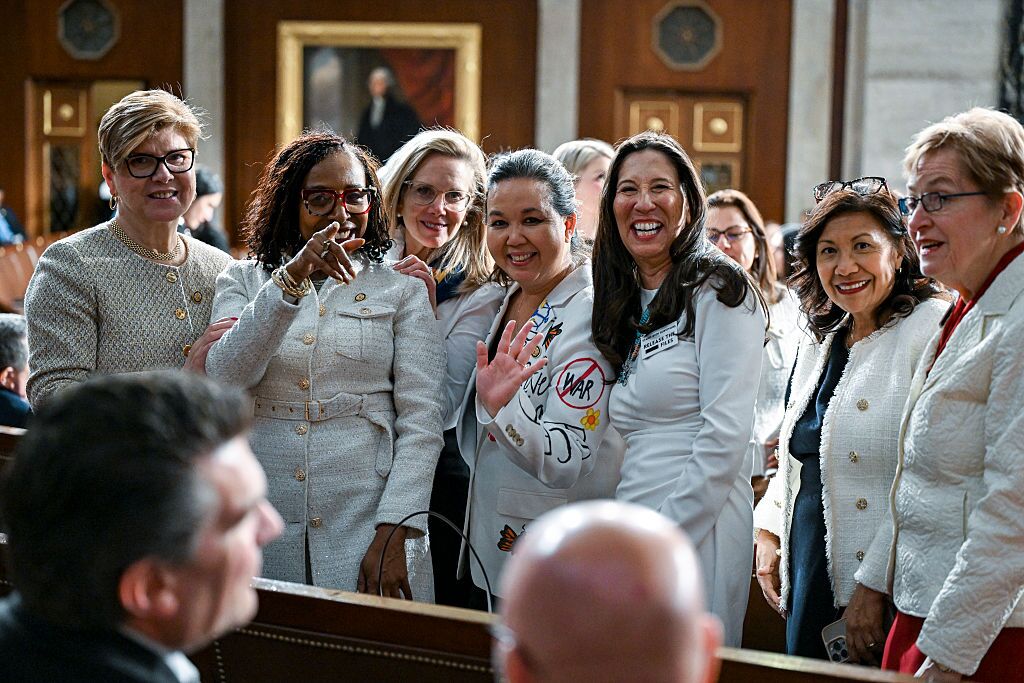
Ron Brownstein asks (behind a CNN paywall) whether “The GOP’s Biggest 2026 Risk May Be Hiding in Plain Sight.” Here’s an extended excerpt that lifts up the broader reality of what issues matter more to women in men—and what they are seeking in their elected representatives.
Celinda Lake, a longtime Democratic pollster, has a simple formula for her party’s success: Democrats triumph in elections when they win among women by more than Republicans win among men.
Democrats passed that test in the 2018 midterm and 2020 presidential elections, and flunked it during the 2022 midterm and 2024 presidential elections, exit polls show. This year, polls offer Democrats encouragement that they could again come out on the right side of Lake’s equation in November.
Trump’s approval rating among men has run close to even in many recent national polls. But those same surveys now routinely show him confronting cavernous deficits among women, with 60 percent or more of them typically saying they disapprove of his performance in office.
Indeed, for all the understandable focus on Trump’s erosion among the untraditional groups of voters that moved toward him in 2024—young men, Latinos, working-class non-White voters—the GOP’s greatest threat in 2026 may be hiding in plain sight: towering discontent among female voters about what Trump has, and has not, done in his second term…
Women are also more likely than men to say Trump’s policies are compounding, rather than alleviating, their financial squeeze. In a recent Fox News poll, about three times as many female voters said they have been hurt than helped by Trump’s economic policies; male voters divided more closely. Likewise, in a January Marquette University Law School survey, almost two-thirds of women (compared with just over half of men) said Trump’s policies had increased rather than reduced inflation. Women are consistently much more hostile in polls to Trump’s tariffs than men.
This gender divide extends to other core Trump policies. Women are more likely than men to say Trump’s aggressive assertion of presidential powers constitute a unique threat to our system of government; more likely to disapprove of the big Medicaid cuts in last year’s “One Big Beautiful Bill” and the GOP Congress’ decision to let the enhanced subsidies under the Affordable Care Act expire; much more likely to say Trump’s mass deportation program has been too harsh and made America less safe, not more; and more likely to say Trump has “gone too far” in using federal forces against protesters. In all these ways, Payne says, women feel Trump is unleashing an unsettling level of “chaos,” both at home and abroad. Trump and Republicans “offered themselves as protection” from disorder in 2024, she says, “but instead they are becoming the threat.”
CAWP: Election Watch 2026 Resources
I am so grateful to the team at the Center for American Women in Politics. As the 2026 primary season gets underway, here is CAWP’s summary of its resources associated with the 2026 elections.
- 2026 Summary of Women Candidates: All the numbers on women running for Congress, governor, other statewide elective executive offices, and state legislature, with accompanying data visualizations. Comparisons of 2026 data to historical records and previous election cycles.
- 2026 Potential and Filed Women Candidates: Full list of announced and potential women candidates for Congress, governor, and other statewide elective executive offices. Real-time updates throughout the primary season will become the official list of all filed candidates once filing deadlines have passed.
- Election Results and Analysis: Results for women candidates in every primary election contest alongside analysis of trends and data in election 2026 from CAWP experts and external scholars.
- Women as Percentage of 2026 Major-Party Candidates and Nominees
- Women, Money, & Politics Watch 2026: Launching in early March, this resource will analyze gender and campaign finance data throughout the 2026 election from both a candidate and donor perspective.
- Rebound Candidates in 2026 Elections: List of candidates who lost a 2024 congressional or statewide election but are running again for the same or different office.
- Woman vs. Woman: Congressional and Gubernatorial Races: Tracks every general election contest for Congress or governor in which both major-party nominees are women. Links to a full list of all such elections going back to 1944, when the first all-woman general election for these offices occurred.
- Historical Facts on Women Candidates: Decades of CAWP data on women candidates and nominees for president, vice president, Congress, statewide elective executive offices, including governorships, and state legislatures. This page also includes information on the current records for women candidates and nominees for various levels of office, with breakdowns by party.
- Data on Officeholders: Explore women’s current political representation from local office all the way up to Congress, and see women’s representation in your state with our interactive state-by-state map. Also see CAWP’s Women Elected Officials Database, which contains entries for every woman who has served in statewide executive office, state legislature, Congress, and federal executive office, dating back to 1893, when the first woman was elected to statewide office.
- Data on Voters: Women vote in larger numbers and higher proportions than their male counterparts. Explore historical information on gender differences in registration and turnout, as well as gender gaps in vote choice and party identification.
Columnist: Crowded Illinois Primaries on March 17 Call for Ranked-Choice Voting
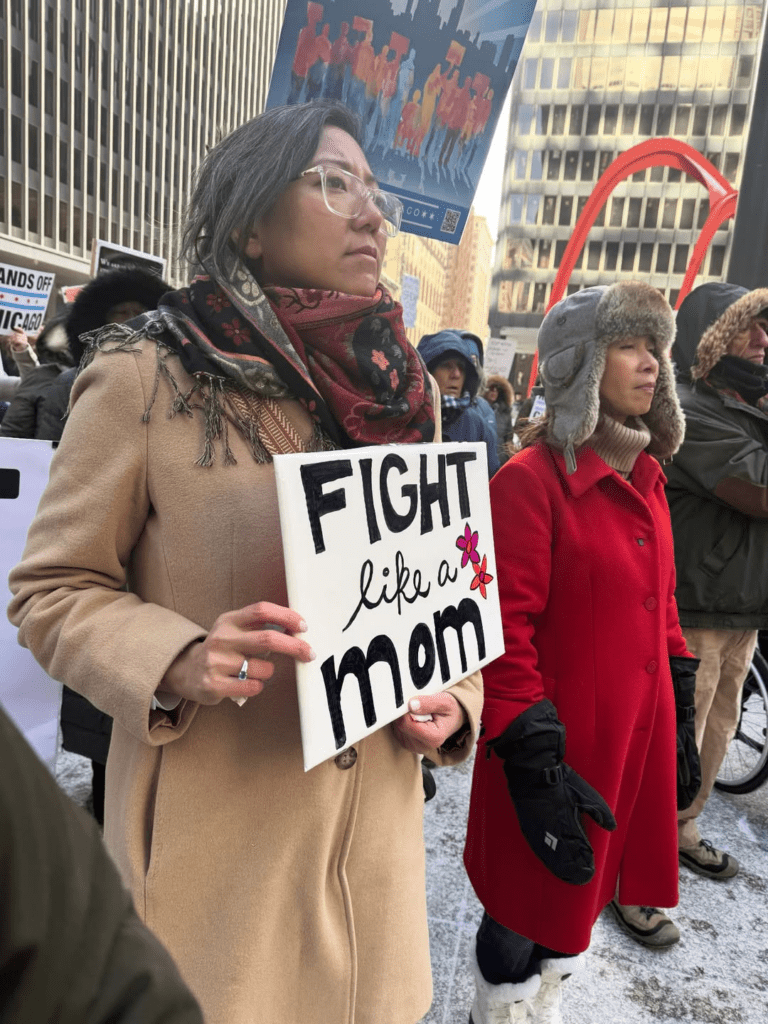
Award-winning journalist Mar Halperin has a terrific Chicago Tribune column walking through the slew of Democratic primaries for U.S. Senate and U.S. House, where the winner will be heavily favored in November. Multiple women are running, yet the “choose-one” ballots undermine efforts to build coalitions and to be truly representative of voters. Here’s an excerpt where she proposes a solution that RepresentWomen has long seen as an advance for women and for our democracy.
Although attention in the Illinois race for U.S. Senate focuses on the three top contenders, there are seven others in the race; each can pull a small percentage of voters to distort the outcome in this race, too.
The candidate with the most votes in a congressional race—no matter how few—will be the winner of the Democratic primary, which generally determines the winner in November as well. This means Illinois can expect to seat new members of Congress with meager voter support, unless a record number of candidates choose to drop out and endorse another in the remaining weeks of this election. Even if candidates do coalesce, ballots are printed and early voting underway, so the opportunity to influence an outcome in this way is fading fast.
But why should the system put this pressure on (mostly) newcomers who want to serve? Why should voters have a limited choice in a field with abundant options? This ballot is the best argument I’ve seen for ranked-choice voting, or RCV.
RCV allows voters to state their second, third and sometimes more choices in a crowded field. If no candidate gets 50%, the lowest candidate is dropped, and their supporters’ votes go to their second choice. That tally is repeated until one candidate gets over 50 percent of the vote.
The benefits go beyond leveling the playing field and easing voter frustration, according to a comprehensive review by Fair Vote, the national group promoting RCV:
- Voters in RCV jurisdictions are 17 percent more likely to turn out for municipal elections than those in non-RCV jurisdictions, according to a 2024 study.
- Youth turnout in RCV cities was higher than youth turnout in non-RCV cities, according to a 2021 study by researchers in Iowa and Wisconsin.
- And, despite fears that RCV discourages voters of color, a 2025 study finds that, “If anything, our results suggest that people from each race/ethnic group examined here had higher rates of turnout in RCV cities than these groups had in other places.”
So, why don’t we have RCV in Illinois? It’s been approved in several communities, including Evanston, Skokie and Oak Park, but lawsuits are stalling implementation. While legal challenges wind their way through state courts, lawmakers are trying to clarify the Illinois election code to make it easier to implement RCV.
Voters, let’s contact our representatives and urge them to get this job done in the current legislative session. It’ll give us a system that encourages and supports more candidates to run while giving voters more power in a crowded field, replacing the current system that weakens candidates and frustrates voters.
How Title IX Boosts American Women at the Olympics
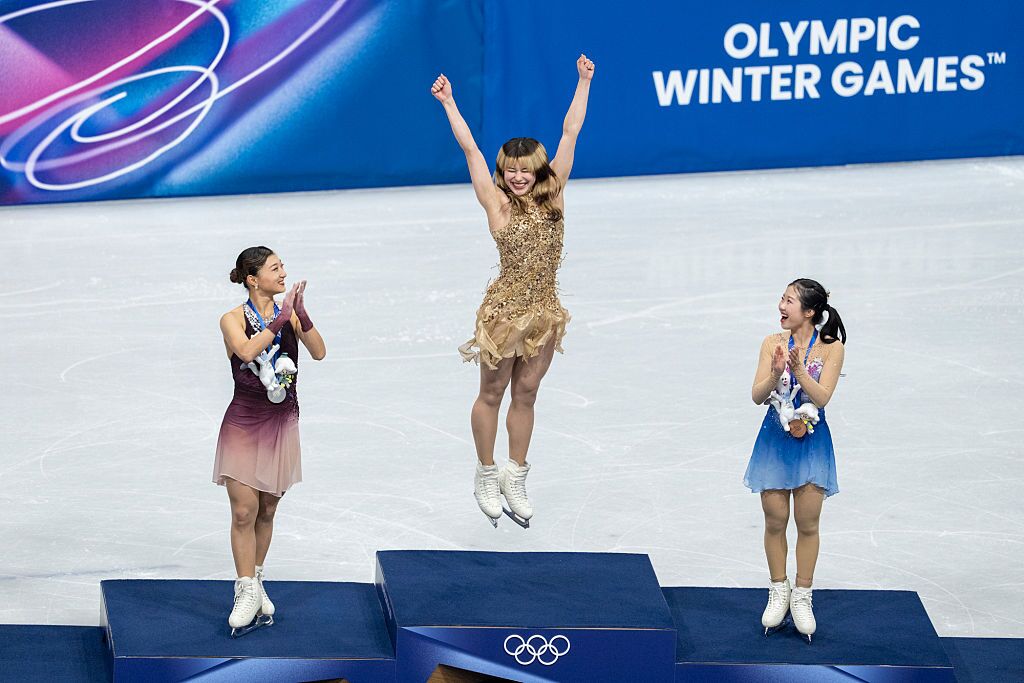
Women were nearly half of all athletes in the 2026 Winter Olympics, their highest ever. Women’s events were among the most popular, from figure skating to skiing and hockey. While American men trailed in winning the most medals, American women led the world—a testament to their grit and skill, but also the importance of intentionality in tackling inequality. Christine Brennan in USA Today explains:
As the 2026 Winter Olympics have come to a close, for the third consecutive Winter Games, U.S. women have won more gold medals and more medals overall than U.S. men. The final tally here in Milan: American women won six gold medals and 17 medals overall. The U.S. men? Four golds and 12 overall. Two other gold medals and four overall (the U.S. ended up with a historic 12 golds and 33 overall) were in mixed gender events.
This mirrors what is happening in the much larger Summer Olympics, in which U.S. women have won more golds and more medals than U.S. men for the past four consecutive Summer Games, going back to the 2012 London Olympics. In Paris a year and a half ago, U.S. women won 65 percent of the 40 gold medals won by Americans (26-13, with one won in a mixed gender event.) And they won 68 medals overall to 52 for the men, with six in mixed events. ..
The reason for all the U.S. women’s success? It’s Title IX, the law signed by President Richard Nixon in June 1972 that opened the floodgates for girls and women to play sports and created the mindset of opportunity and participation that dominates American youth, high school and college sports to this day…
“These Olympics have showcased the global impact of Title IX more than 50 years after its passing,” women’s sports legend Billie Jean King texted USA TODAY Sports on Sunday. “One of the biggest indicators of the power of the legislation is the establishment of professional sports leagues, like the Professional Women’s Hockey League, which provides women athletes opportunities to continue to compete after the Olympics and make a living playing the sport they love. These opportunities in the future are why it is important we continue to protect the legislation and intent of Title IX for all.”
Kudos to the Class and Talents of the American Women’s Hockey Team
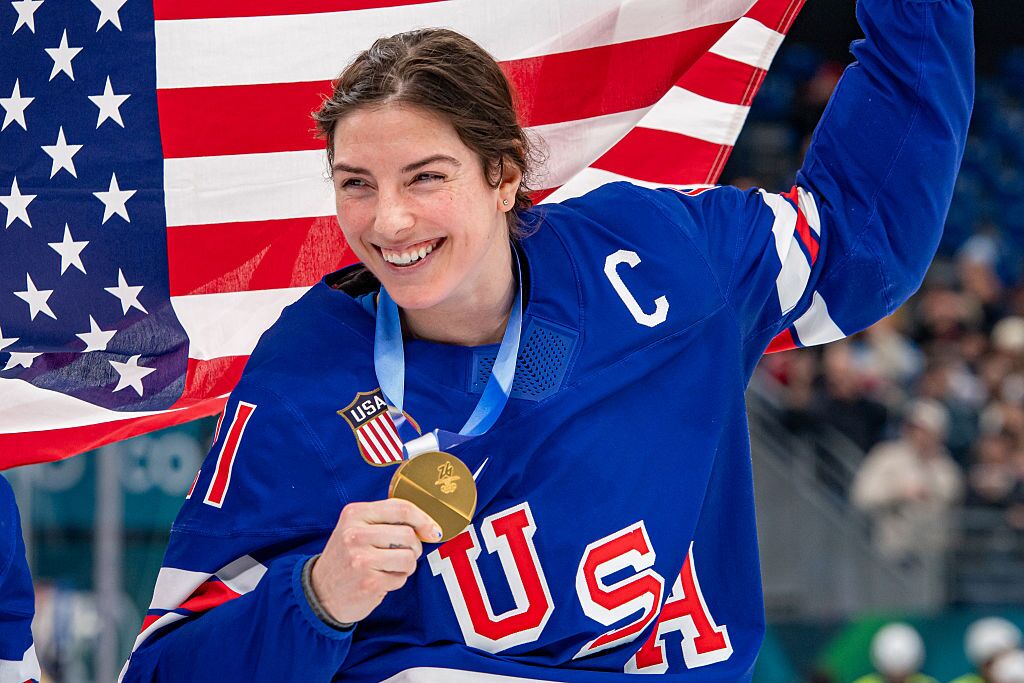
The leaders of the American women’s hockey team outclassed their fellow gold medal winners among the men, who were immediately politicized by Donald Trump. Watch Megan Keller’s amazing “golden goal” in overtime to recognize their talent, and read this article from NBC News:
Women’s team captain Hilary Knight said Wednesday on ESPN’s “SportsCenter” that she found the joke “distasteful” but that she also felt the men’s team was “in a tough spot.”
““I think this is just a really good learning point to really focus on, you know, how we talk about women,” Knight said. “Not only in sport, but in industry. Women aren’t less than, and our achievements shouldn’t be overshadowed by anything else other than how great they are.”
She added that she felt the men’s and women’s teams had developed a good relationship at the Olympic Village. Knight said she doesn’t want what she described as a “quick lapse” to overshadow the gold medal wins. Speaking at a news conference hosted by her PWHL team, the Seattle Torrent, Knight said Wednesday that “it’s not my responsibility” to explain others’ behavior. “These women are amazing,” she said, signaling toward fellow Team USA and Seattle Torrent teammates Alex Carpenter, Cayla Barnes and Hannah Bilka, who were seated alongside her.
“And whatever’s going on should never outshine or minimize their work and our success on the world stage,” Knight continued. “This was the best American women’s hockey team — the best American team — we’ve ever put together on a world stage.
Jill Filipovic on the Plot Against American Women

I have a history of working toward a better democracy and more women in office with women from across the political spectrum. That doesn’t mean going along with a party when its positions are against the values of democracy and equality. Jill Filipovic, in her Throughline (and cross-posted at Ms.) tackles the implications of the new Heritage Report, “Saving America by Saving the Family,” that I featured last week.
The fundamental problem with the conservative life script for women is that when women have choices, we don’t tend to follow the conservative life script. For any of you reading who are under the age of, say, 45: How old were you when you met your partner, if you have a partner? (I was 30). If you’re over 45, think of the younger people you know: how old were they when they met their partner? Overwhelmingly, the Americans who marry are meeting their spouses in their late 20s and into their 30s (and beyond). The average age of first marriage for an American woman is a touch older than 28, and for men it’s 30. These couples have largely not been together since they were 16 and simply chose to wait a decade-plus to wed. It took them a while to find the right person — and to become a person who felt mature enough and themselves enough to tie themselves to another for life.
This is a good thing, if what you care about is happiness and human flourishing. It is a bad thing if all you care about is women doing their maximal reproductive and wifely duties. And the only real way to force women to do their maximal reproductive and wifely duties is to, well, force them.
I am not exaggerating when I say that the forces of the New Right want to use the full force of the state to impose a national patriarchy. I read through the Heritage Foundation’s plan to save America by saving marriage. Here is the plan, in Heritage’s own words, with a little translation from me. They are explicit: Have fewer women go to college; push women to marry and start having babies when they’re very young; ban same-sex marriage; ban IVF; limit contraception access; strip basic rights even to physical safety from children; penalize single mothers; and impose conservative Christianity as a national religion.
Denmark Election Could Extend Women’s Leadership
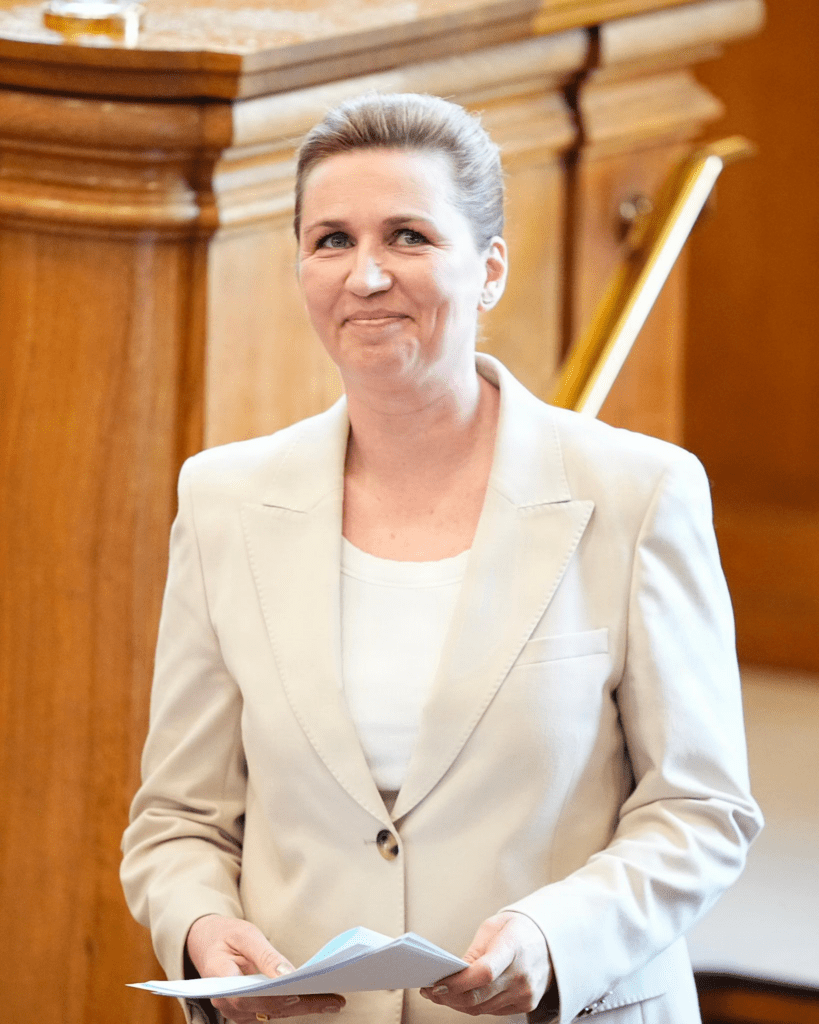
Denmark’s second-ever woman prime minister, Mette Frederiksen, has called for March 24 elections that could extend her leadership to more than 10 years and make her the nation’s longest-serving prime minister in nearly a century. Reuters explains how Frederiksen has received a surge of support in the wake of Donald Trump’s threats to take over Greenland, which is a Danish territory.
“Denmark will hold a parliamentary election on March 24, Prime Minister Mette Frederiksen said on Thursday, seeking to capitalize on a surge in support for her defiant stance against U.S. pressure over Greenland.
Frederiksen has spent recent months rallying European leaders against President Donald Trump’s renewed interest in annexing the Arctic island, an effort that opinion polls suggest has bolstered her popularity… “This will be a decisive election, because it will be in the next four years that we as Danes and as Europeans will really have to stand on our own feet,” Frederiksen said. “We must define our relationship with the United States, and we must rearm to ensure peace on our continent.”
The Greenland crisis has further raised Frederiksen’s profile on the international stage, boosting the standing she gained through her swift response to the COVID-19 pandemic and for building European support for Ukraine.”
Laura Fernandez Wins Presidency in Costa Rica
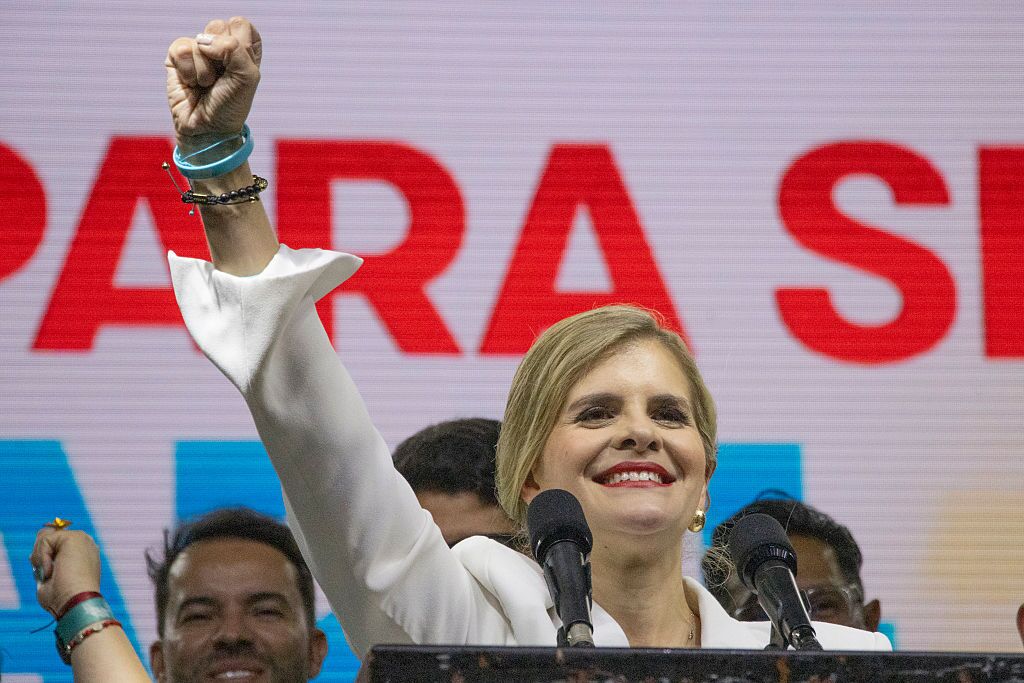
Earlier this month, Costa Rica elected the nation’s second-ever female president, conservative candidate Laura Fernández. She overperformed other recent presidents, as reported in Americas Quarterly.
“Fernández will become the 50th president, the second woman to assume the presidency in Costa Rica, after Laura Chinchilla Miranda did so in 2010. Exceeding the threshold of 40 percent of valid votes cast has not happened since that election, and this reflects significant support for the start of her term. The president-elect was emphatic in stating that she will continue the economic and political legacy of President Chaves, with rhetoric that continues the president’s confrontational line, on the one hand proposing a government of dialogue and national harmony, but on the other, warning the opposition that they must be respectful of the will of the people, not an “obstructionist and sabotaging” opposition, which she blamed for institutional erosion and obstacles to achieving prosperity and well-being.”
See You at Politics & Prose in D.C. on Friday, March 6
.png)
I am excited to be interviewing noted author Lorissa Rinehart next Friday, March 6, at Politics and Prose at the Wharf in Washington, D.C., to discuss her new book Winning the Earthquake—use this link to register.
Snowdrops emerged this week …

That’s all for now—until next week!
Great Job Cynthia Richie Terrell & the Team @ Ms. Magazine for sharing this story.




.png&description=Democracy+Is+Not+Self-Executing%3A+How+We+Shape+a+Better+Government+Through+Laws%2C+Institutions+and+Culture)