Home News Page 13

Trump announces ‘major combat operations’ in Iran | Houston Public Media

Trump announces ‘major combat operations’ in Iran | Houston Public Media

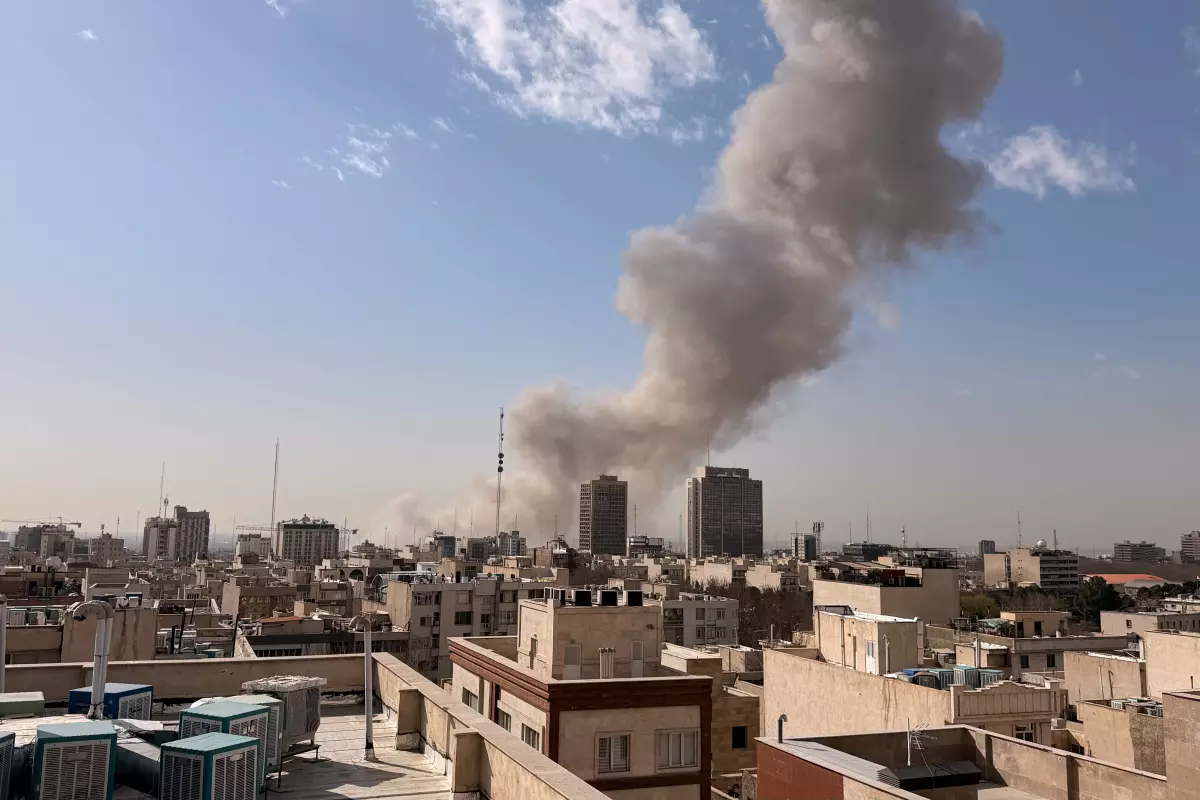
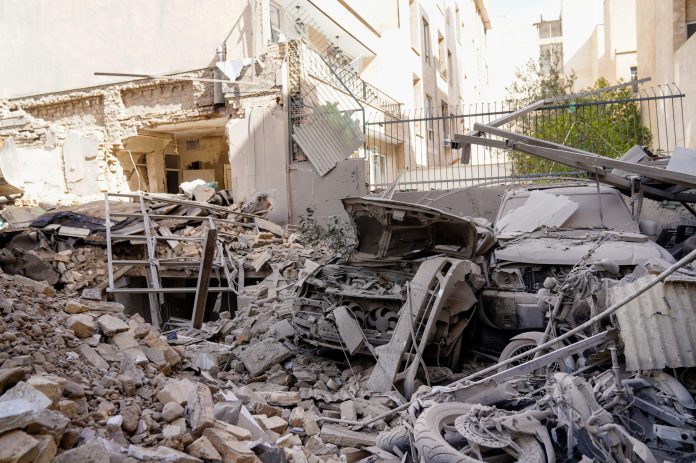
Smoke rises on the skyline after an explosion in Tehran, Iran, Saturday. (AP)

TEL AVIV — The U.S. and Israel have launched strikes against Iran with the goal of toppling the regime, President Trump and Israeli Prime Minister Benjamin Netanyahu said Saturday.

Iran retaliated by launching missiles at Israel and a U.S. naval base in Bahrain. An Iranian official said all Israeli and U.S. interests in the region were now considered legitimate targets.

The joint U.S.-Israeli attack on Iran comes after weeks of escalating tensions and a major U.S. military buildup in the region, as the U.S. and Iran tried to negotiate a deal to limit Iran’s nuclear program. Trump said those efforts had failed.

“Bombs will be dropping everywhere,” President Trump said, addressing Iranians in a video posted to his Truth Social account. “When we are finished, take over your government. It will be yours to take. This will be, probably, your only chance for generations.”

The Israeli military said in a statement its fighter jets were striking “dozens of military targets” in Iran with “full synchronization and coordination” between the Israeli and U.S. militaries following months of joint planning.

Prime Minister Benjamin Netanyahu said the goal of the joint U.S.-Israeli attack is to “remove the existential threat posed by the terrorist regime in Iran.”

“Our joint action will create the conditions for the brave Iranian people to take their destiny into their own hands,” Netanyahu said in a video.

A person briefed on the operation told NPR it was expected to last a few days, with Israel’s military focusing on targeting Iran’s missile program.

“We are going to destroy their missiles and raze their missile industry to the ground,” Trump said.

Israel has closed its airspace to all passenger flights, and civil defense protocols have been activated. Regional military forces remain on high alert.

A 48-hour state of emergency has been declared nationwide. Air raid sirens have been sounding across Israel, with authorities warning civilians to enter bomb shelters.

Trails of smoke streaked the sky above Tel Aviv as Israeli interception systems fired at incoming missiles. A hospital in central Israel began moving operations to an underground fortified compound.

“Our objective is to defend the American people by eliminating imminent threats from the Iranian regime, a vicious group of very hard, terrible people. It’s menacing activities directly endanger the United States, our troops, our bases overseas and our allies throughout the world,” Trump said.

Trump said the U.S. had “sought repeatedly to make a deal” but Iran “rejected every opportunity to renounce their nuclear ambitions.”

Trump told the Iranian Revolutionary Guard Corps to “lay down your arms… or you will face certain death.”

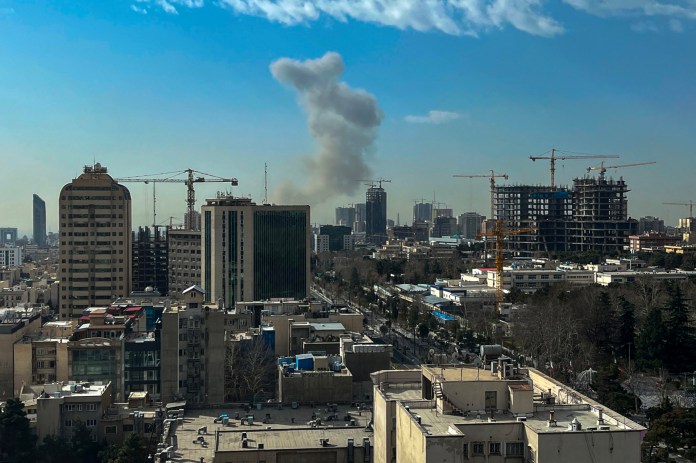
Iranian government media reported rocket fire in parts of the capital, Tehran. State television has broadcast footage showing smoke rising after a blast in the city. The extent of the damage and potential casualties has not yet been confirmed.

The strike follows weeks of speculation about potential military action against Iran, particularly amid a significant U.S. military buildup in the Middle East.

Great Job & the Team @ Houston Public Media for sharing this story.

Trump was once wary of ordering regime change in Iran. Here’s what made him change his mind

Trump was once wary of ordering regime change in Iran. Here’s what made him change his mind

WEST PALM BEACH, Fla. – With Saturday’s military operation against Iran, President Donald Trump demonstrated a dramatic evolution in risk tolerance, adjusting in just a matter of months how far he was willing to go in using American military might to confront Tehran’s clerical rule.

Guardrails were tossed aside, as Trump and Israeli Prime Minister Benjamin Netanyahu ordered up a battle plan that included targeted strikes on Iran’s leadership, including the 86-year-old Supreme Leader Ayatollah Ali Khamenei whose death Trump triumphantly announced in a social media post hours after launching the military operation.

For Trump, it was a far cry from where he stood just eight months ago. At Israel’s urging during its 12-day war with Iran last June, he agreed to deployB-2 bombers to pummel three key Iranian nuclear sites — but drew a bright red line when Israelis presented his administration with a plan for killing Khamenei.

The president peppered the supreme leader with thinly veiled threats back in June that he could have killed him if he wanted to. But he rejected the Israeli plan out of concern that it would destabilize the region.

That caution was set aside on Saturday with Trump announcing Khamenei had been killed, while the Israeli military announced it had taken out Iran’s defense minister and the commander of its Revolutionary Guard. Iran had not confirmed the Supreme Leader’s death as of Saturday evening.

Khamenei “was unable to avoid our Intelligence and Highly Sophisticated Tracking Systems and, working closely with Israel, there was not a thing he, or the other leaders that have been killed along with him, could do,” Trump said. “This is the single greatest chance for the Iranian people to take back their Country.”

Trump loses patience

Trump had pursued talks with Iran for months. Administration officials told reporters that they offered Iran many ways to have a peaceful nuclear program that could be used for civilian purposes, including an offer of free nuclear fuel in perpetuity.

But the officials, who were not authorized to comment publicly and spoke on condition of anonymity, said it was clear to them that Iran wanted enriched uranium for a nuclear weapon. One of them said that Iran has met their offers with “games, tricks, stall tactics.”

The order to launch strikes came just two days after Trump dispatched his special envoys, Steve Witkoff and Jared Kushner, for another round of talks with Iranian officials. Middle East and European allies were urging the U.S. administration to give negotiations more time as Trump signaled he was running out of patience.

“The consequences are likely to be as far-reaching as they are uncertain: Within the system that has held power for nearly five decades, between the government and a dissatisfied populace, and between Iran and its adversaries,” said Ali Vaez, Iran project director at the International Crisis Group. “And although the regime is weakened, a sense that this showdown is an all-or-nothing struggle for its very survival could lead it to respond with every tool still at its disposal.”

Revised risk calculation

Saturday’s strikes came after a series of past provocative actions against Iran that resulted in limited blowback, which seemed to inform Trump’s risk calculation, said Aaron David Miller, who served as an adviser on Middle East issues to Democratic and Republican administrations over two decades.

Trump in 2018 pulled out of the Iran nuclear deal negotiated by Democratic President Barack Obama’s administration. In 2020, Trump ordered a drone strike killing top Iranian Gen. Qassem Soleimani.

At the time, the killing of Soleimani, the head of Iran’s elite Quds Force, was arguably the most provocative U.S. military action in the Middle East since President George W. Bush launched the 2003 Iraq War to topple Saddam Hussein.

And then Trump this past June ordered the strikes on Iran’s nuclear facilities, which he claimed had “obliterated” their program.

“He did all of these things without cost or consequence to him,” said Miller, who is now a senior fellow at the Carnegie Endowment for International Peace. “He’s been risk-ready. That’s the nature of his personality.”

Trump administration officials had publicly urged Tehran to give up its nuclear weapons and ballistic missile programs and end its backing of regional armed proxies. But administration officials said that Tehran would not engage on the missile and proxy concerns.

Iran’s rigidity, at a moment when its economy is in shambles weighed by decades of sanctions and its military battered by last year’s war, astounded Trump.

Even before the latest round of talks ended on Thursday, there were signs Trump was leaning toward military action.

On Tuesday, Trump in his State of the Union speech claimed that Iran has been building ballistic missiles that could reach the U.S. homeland — a justification that he repeated again on Saturday as he announced the bombardment of Iran was underway.

Iran hasn’t acknowledged it is building or seeking to build intercontinental ballistic missiles. The U.S. Defense Intelligence Agency, however, said in an unclassified report last year that Iran could develop a militarily viable intercontinental ballistic missile by 2035 “should Tehran decide to pursue the capability.”

Secretary of State Marco Rubio told reporters on Wednesday that Iran’s refusal to speak to its ballistic missile program was a “big problem.” Rubio declined to address the DIA finding that Iran was still years away from developing a missile that could reach the United States.

And Vice President JD Vance, a former U.S. Marine who served in Iraq and has been skeptical of U.S. interventions, on Thursday told The Washington Post that Trump hadn’t decided whether to strike Iran. But he offered assurances that military action would not result in the United States becoming involved in a drawn-out conflict.

“The idea that we’re going to be in a Middle Eastern war for years with no end in sight — there is no chance that will happen,” Vance said.

By Friday, Trump was venting anew about Iran’s approach.

I’m not happy with the fact that they’re not willing to give us what we have to have,” Trump said. “I’m not thrilled with that. We’ll see what happens.”

Senior U.S. lawmakers were told early Saturday that the strikes were coming. Trump monitored the operation from his Mar-a-Lago resort in Palm Beach, Florida, with members of his national security team.

Trump may have been emboldened by his Venezuela experience

Trump’s success with the U.S. military operation earlier his year to capture Venezuelan leader Nicolás Maduro and whisk him and his wife to New York City to face federal drug conspiracy charges also may have emboldened the president, said Jonathan Schanzer, a former Treasury Department official who is now executive director of the Foundation for Defense of Democracies, a hawkish Washington think tank.

Trump had threatened military action last month, but held off, as Iran carried out a deadly crackdown on protests. The demonstrations were spurred by economic grievances but morphed into a nationwide, anti-government push against the ruling clerics.

As human rights groups reported that thousands were killed in the Iranian crackdown, Trump told protesters that help was on its way, but it did not immediately come and the protests petered out.

Schanzer said that Trump’s decision not to follow through last month gave his team more time to assemble the now massive presence of fighter jets and warships in the region — as he had done in the Caribbean ahead of the Venezuela operation.

It was leverage, Trump hoped, that would get Khamenei to blink. But the Supreme Leader would not capitulate.

“The way this unfolded was inevitable, because there was no way that the Ayatollah was going to show flexibility,” Schanzer said.

___

Madhani reported from Washington.

Copyright 2026 The Associated Press. All rights reserved. This material may not be published, broadcast, rewritten or redistributed without permission.

Great Job Aamer Madhani And Josh Boak, Associated Press & the Team @ KSAT San Antonio for sharing this story.

PBD Panelist says right-leaning comedian Dave Smith calling Trump a “traitor” over waging a war with Iran is equivalent to “the N-word for your leader”

PBD Panelist says right-leaning comedian Dave Smith calling Trump a “traitor” over waging a war with Iran is equivalent to “the N-word for your leader”

Citation

From the February 28, 2026, edition of PBD Podcast, livestreamed on YouTube

VINCENT OSHANA (PANELIST): Can I say something, Pat? Yeah. Like, I saw Dave Smith today. He called the president a traitor. A traitor.

TOM ELLSWORTH (PANELIST): It’s disappointing.  I mean, I see what Dave is doing here. He’s bringing up an old tweet.

But this is not a time, you know, for that.  If you wan to say I disagree with this, he’s a warmonger. I disagree with this. This is illegal. Then you can join Ro Khanna. You can join Thomas Massey with that opinion.

But to say traitor, traitor is a is a high order. That’s like the N-word for your leader. You were you’re basically using the N-word on your leader.  Traitor, traitor is against your own sovereign country.  And Dave, I just don’t think that’s the right word.  I think that’s wrong.

You’re a thoughtful guy, but I completely disagree with this.  I think you need to roll that back.
 

Great Job Media Matters for America & the Team @ Media Matters for America Source link for sharing this story.

With Love: Living consciously in nature – Greenpeace Australia Pacific

With Love: Living consciously in nature – Greenpeace Australia Pacific

I fell flat on my backside one afternoon this January and, weirdly, it made me think of you. Okay, I know that takes a bit of unpacking—so let me go back and start at the beginning.

For the last six years, our family has joined with half a dozen others to spend a week or so up at Wangat Lodge, located on a 50-acre subtropical rainforest property around three hours north of Sydney. The accommodation is pretty basic, with no wifi coverage—so time in Wangat really revolves around the bush. You live by the rhythm of the sun and the rain, with the days punctuated by swimming in the river and walking through the forest. 

An intrinsic part of Wangat is Dan, the owner and custodian of the place, and the guide on our walks. He talks about time, place, and care with great enthusiasm, but always tenderly and never with sanctimony. “There is no such thing as ‘the same walk’”, is one of Dan’s refrains, because the way he sees it “every day, there is change in the world around you” of plants, animals, water and weather. Dan speaks of Wangat with such evident love, but not covetousness; it is a lightness which includes gentle consciousness that his own obligations arise only because of the historic dispossession of others. He inspires because of how he is. 

One of the highlights this year was a river walk with Dan, during which we paddled or waded through most of the route, with only occasional scrambles up the bank. Sometimes the only sensible option is to swim. Among the life around us, we notice large numbers of tadpoles in the water, which is clean enough to drink. Our own tadpoles, the kids in the group, delight in the expedition. I overhear one of the youngest children declaring that she’s having ‘one of the best days ever’. Dan looks content. Part of his mission is to reintroduce children to nature, so that the soles of their feet may learn from the uneven ground, and their muscles from the cool of the water.

These moments are for thankfulness in the life that lives. 

It is at the very end of the walk when I overbalance and fall on my arse—and am reminded of the eternal truth that rocks are hard. As I gingerly get up, my youngest daughter looks at me, caught between amusement and concern, and asks me if I’m okay. 

I have to think before answering, because yes, physically I’m fine. But I feel too, an underlying sense of discomfort; it is that omnipresent pressure of existential awareness about the scale of suffering and ecological damage now at large in the world, made so much more immediately acute after Bondi; the dissonance that such horrors can somehow exist simultaneously with this small group being alive and happy in this place, on this earth-kissed afternoon. 

How is it okay, to be “okay”? What is it to live with conscience in Wangat? Those of us who still have access to time, space, safety and high levels of volition on this planet carry this duality all the time, as our gift and obligation. It is not an easy thing to make sense of; but for me, it speaks to the question of ‘why Greenpeace’? Because the moral and strategic mission-focus of campaigning provides a principled basis for how each of us can bridge that interminable gulf. 

The essence of campaigning is to make the world’s state of crisis legible and actionable, by isolating systemic threats to which we can rise and respond credibly, with resources allocated to activity in accordance with strategy. To be part of Greenpeace, whether as an activist, volunteer supporter or staff member, is to find a home for your worries for the world in confidence and faith that together we have the power to do something about it. Together we meet the confusion of the moment with the light of shared purpose and the confidence of direction. 

So, it was as I was getting back up again from my tumble and considering my daughter’s question that I thought of you—with gratitude, and with love–-because we cross this bridge all the time, together, everyday; to face the present and the future.

‘Yes, my love’, I say to my daughter, smiling as I get to my feet, “I’m okay”. And I close my eyes and think of a world in which the fires are out, and everywhere, all tadpoles have the conditions of flourishing to be able to grow peacefully into frogs. 

Thank you for being a part of Greenpeace. 

With love,

David

Great Job David Ritter & the Team @ Article – Greenpeace Australia Pacific for sharing this story.

Why did Netflix back down from its deal to acquire Warner Bros.? | TechCrunch

Why did Netflix back down from its deal to acquire Warner Bros.? | TechCrunch

Netflix stunned the entertainment world this week when it declined to raise its bid for Warner Bros. Discovery, setting the stage for Paramount Skydance to win ownership of the Hollywood studio.

At the time, Netflix co-CEOs Ted Sarandos and Greg Peters said they were being financially disciplined. Now reporting in Bloomberg offers more details about why Netflix executives backed down from a bidding war that it seemed to win back in December

For one thing, the streaming giant’s shareholders appeared deeply skeptical that the acquisition was a good deal — Netflix’s share price declined 30% since announcing the deal, while the subsequent news that it was backing down sent Netflix stock up nearly 14%.

For another, Netflix’s commitment to the deal reportedly wavered after Paramount came in with an increased offer and seemed willing to go several more rounds in a bidding war.

By the time Sarandos met with Trump administration officials on Thursday, he may already have decided to concede. In fact, since President Donald Trump had previously warned him not to overpay, Sarandos reportedly told him, “I took your advice.”

Meanwhile, employees at Warner Bros. now worry about major studio layoffs and conservative political pressure on CNN.

Great Job Anthony Ha & the Team @ TechCrunch for sharing this story.

International Reactions to Military Strikes on Iran: A Tipping Point for the UN Charter?

International Reactions to Military Strikes on Iran: A Tipping Point for the UN Charter?

At 2.30am EST on Saturday morning, President Donald Trump announced via a video on Truth Social from his resort in Mar-a-Lago that the U.S. military has begun “major combat operations in Iran.” The overnight strikes, which are an unequivocal violation of the UN Charter, come after weeks of U.S. military build-up in the region and against the backdrop of ongoing diplomatic negotiations over Iran’s nuclear program.

At 4pm this afternoon, the UN Security Council (UNSC) will convene in an emergency session to address the crisis. We can expect to hear condemnations from U.S. adversaries, several of which will be hypocritical and performative. It is the behavior of traditional U.S. allies however, and in particular permanent UNSC members the United Kingdom and France, that matters most. Their positioning will be a harbinger of whether the legal cornerstone of the current international order that is designed to maintain, as best as possible, world peace can hold.

In the aftermath of World War II, Article 2(4) of the UN Charter solidified a major shift in understanding about how nation states should interact. In earlier times, using force for political or territorial conquests was commonplace. As Oona Hathway and Scott Shapiro frame it: “The outbreak of war did not constitute a breakdown of the international order—it was the order.” 

Article 2(4) pursued a new path, prohibiting the “threat or use of force against the territorial integrity or political independence of any State.” UN Member States continued to have the full range of non-military options to pursue their interests, and in the UN Charter era we have seen States using economic sanctions, travel bans, and an array of other coercive tools (from overflight denials to non-forcible cyber measures) to influence the behavior of States they feel threatened by. But the use of military force no longer has a lawful place in that toolkit.

There are, of course, two carefully crafted exceptions to this prohibition – one for self-defense in the face of an actual or imminent armed attack, and the other for actions taken through the UN Security Council to maintain or restore international peace and security. As Mike Schmitt, Tess Bridgeman, and Ryan Goodman explained last week in Just Security (and as Marko Milanovic reiterated after the strikes began this morning), neither of these are met in the current situation, and it is not a close case.

The challenge facing the United Nations this afternoon is not about the interpretation of international law. The U.S. military attack on Iran is a textbook example of a manifest violation of Article 2(4). The challenge is a political, economic, and – fundamentally – ethical one. States including the U.K, France, Germany, Australia, and Canada have spent decades espousing their commitment to international law. As recently as this week, each of these countries voted in support of a UN General Assembly resolution supporting Ukraine in the face of Russia’s violation of Article 2(4), which they have each, rightly, condemned.

This afternoon, these States must ask themselves whether the international legal order protects the sovereignty of everyone in the international system, or only the sovereignty of like-minded States. Does their willingness to condemn violations of Article 2(4) extend to everyone, or only to their adversaries (or, alternatively, those with minimal ability to harm their national interests)? 

It is important not to be cavalier about the scale of the challenge facing these traditional U.S. allies as they figure out how to respond to a system in which the United States no longer seems interested in paying even lip service to international law. In the living memory of all the politicians, diplomats and lawyers of these governments, the United States has wanted to present itself in compliance with international law, even amidst the many instances in which it has, in fact, breached the law. The Trump administration’s second term marks a clear break from that approach.

If the recent past provides any prologue, the indicators are poor. This afternoon’s meeting had a dress rehearsal in June 2025, after a series of military attacks on Iran by Israel, and then the United States. At that meeting, the U.K. tried to speak from both sides of its mouth, noting that the U.K. did not participate in the strikes, while carefully avoiding any characterization of the strikes as unlawful:

“We have long made clear that Iran must not have a nuclear weapon and that its nuclear programme represents a serious threat to international peace and security. The United States took action last night to alleviate that threat. The United Kingdom did not participate in United States or Israeli strikes.”

So far today, the U.K. and other erstwhile supporters of the UN Charter have made statements along similar lines. In a joint statement by the U.K., France and Germany, the States’ leaders distance themselves from what they clearly know is unlawful U.S. military action, while refraining from condemning it:

“We did not participate in these strikes, but are in close contact with our international partners, including the United States, Israel, and partners in the region. We reiterate our commitment to regional stability and to the protection of civilian life.”

Canada, meanwhile, has placed itself into alignment with U.S. actions. In a statement issued on X, Prime Minister Carney stated:

“Canada supports the United States in acting to prevent Iran from obtaining a nuclear weapon and to prevent its regime from further threatening international peace and security.”

The statement is an embarrassing about-face following the prime minister’s speech entitled, ““Principled and Pragmatic: Canada’s Path,” presented in Davos earlier this year. 

Australia’s Prime Minister, Anthony Albanese, made a remarkably similar statement:

“We support the United States acting to prevent Iran from obtaining a nuclear weapon and to prevent Iran continuing to threaten international peace and security.”

In the face of Trump’s wide-ranging threats and actions against any who oppose him (tariffs, territorial seizure, invasion and leadership abduction), it is hardly surprising that States like Canada might pull their punches. And for the European Union, with an aggressive Russia on its doorstep and a defense system that will take many years to wean itself off U.S. dependency, the costs of standing up for the UN Charter at this moment are high. 

The trouble is, the long-term cost of giving up on Art 2(4) of the UN Charter may be even higher.

The post International Reactions to Military Strikes on Iran: A Tipping Point for the UN Charter? appeared first on Just Security.

Great Job Rebecca Hamilton & the Team @ Just Security for sharing this story.

Artist Interview: IMAGINE – Our Culture

Artist Interview: IMAGINE – Our Culture

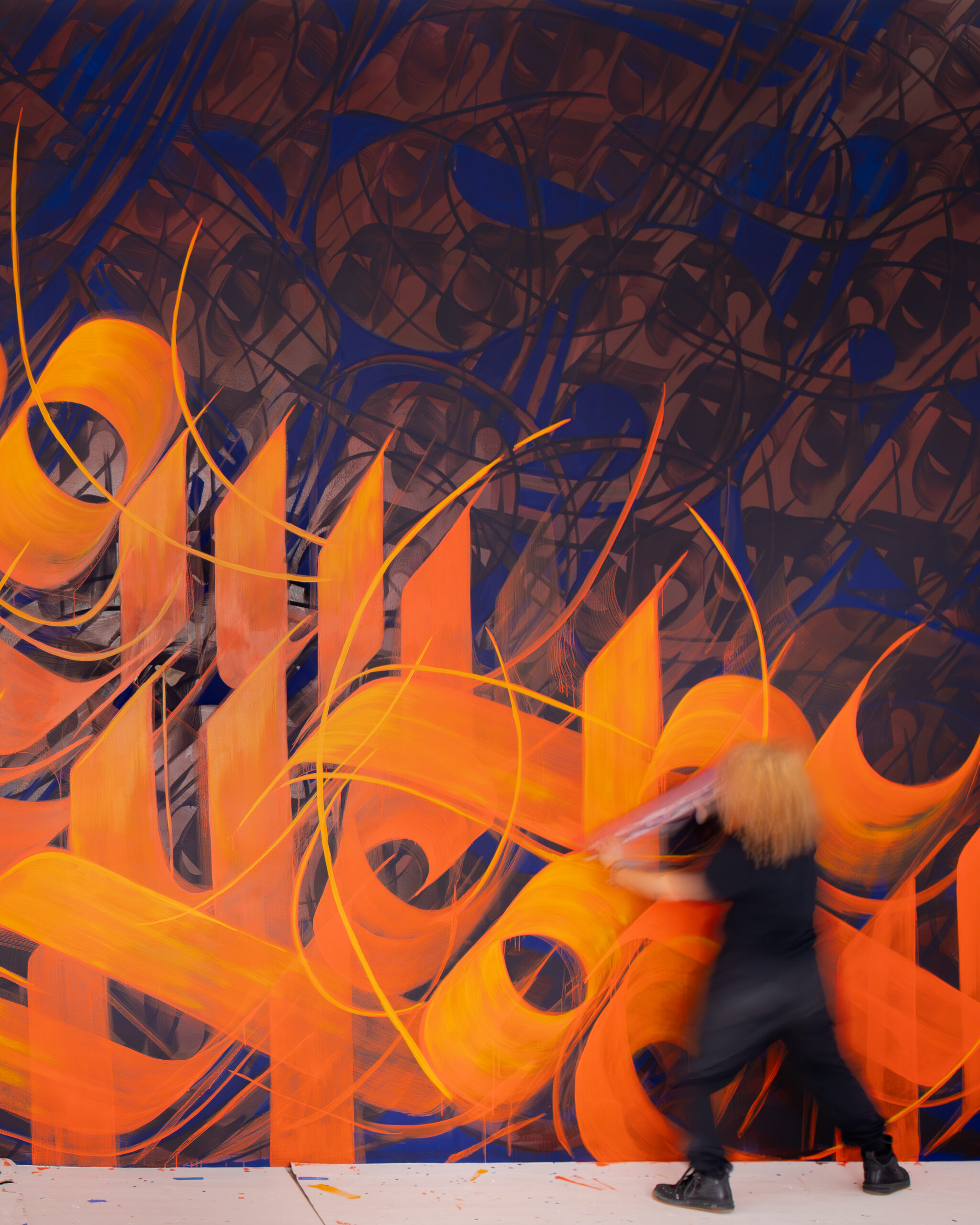
Sneha Shrestha, known artistically as IMAGINE, is a Nepali artist whose practice bridges her native Devanagari script with the visual language of graffiti handstyles. Her work advocates for the preservation of living cultures within contemporary art, insisting that language, ritual, and memory remain active and not just archival. Working across painting, murals and sculpture, Shrestha moves fluidly between meditative abstraction and large-scale public intervention.

Her work balances cultural and political concerns with a deep commitment to material and story telling. In some bodies of work, she foregrounds calligraphic repetition drawn from Sanskrit scriptures and immigration documents, transforming language into meditative fields of colour and gesture. In others, she shifts toward architectural scale and sculptural presence, exploring guardianship, migration and belonging through brass, steel and site-responsive installation. Across mediums, her central themes include cultural continuity, diaspora identity and the creation of spaces that foster reflection, protection and pride.

Shrestha’s sculpture Dwarpalika was acquired by the Harvard Art Museums and is currently on long term view. She is the first contemporary Nepali artist to enter the permanent collection of the Museum of Fine Arts Boston with her painting Home416. She is the recipient of the James and Audrey Foster Prize from the Institute of Contemporary Art Boston. Her public sculpture in Queens, New York, created in partnership with the Rubin Museum of Himalayan Art for the New York City Department of Transportation, was recognised by Our Culture magazine as one of five innovative examples of public art. Her monumental sculpture Calling the Earth to Witness was commissioned by the Isabella Stewart Gardner Museum.

See more of her work on her website or Instagram.

When did you first fall in love with art?

I have loved painting and drawing for as long as I can remember as a child growing up in Kathmandu. Painting, especially, was something I naturally gravitated toward, which has continued to this day. At the same time, being an artist was not in my vocabulary and I hadn’t yet met an artist, so I didn’t know it was something one can do as a profession. Art was simply something I kept doing because it felt right. The idea that this could be my work came later. What started as instinct slowly became purpose.

Language, especially Nepali and Sanskrit, lies at the heart of your work – as does graffiti. What drew you to script and text as an artistic medium, and how did graffiti culture shape the way you work with mantras and spiritual themes?

Graffiti entered my life through my mentor Rob “ProBlak” Gibbs, who introduced me to murals and lettering at the same time. I did not grow up with graffiti culture in Nepal, so I was learning it from the beginning, with a lot of enthusiasm and curiosity. I was drawn to lettering styles, how artists could stretch and bend forms with colors, giving letters so much personality. Looking at letters as images opened something up for me. At some point I asked myself, what would happen if I wrote in Nepali instead? I learned to write in Nepali before I learned English, so those letterforms come more naturally to me. Stylising Devanagari allowed me to really find my voice and make the work my own.

Over time, I began mixing that foundation with the mindfulness practices I grew up with in Nepal. I slowed down and used more brushwork. Writing the same letter or mantra again and again felt meditative. That evolution led me to the style I work in now.

I want Devanagari to have a presence alongside the aesthetic lettering traditions of the world. These scripts carry centuries of history and are still living languages. They deserve to be seen within contemporary art and public space.

Artist Interview: IMAGINE – Our Culture

“IMAGINE” is your mother’s name translated into English. Can you talk about choosing this as your artist name?

I chose “IMAGINE” as my artist name because it is a translation of my mother’s name, Kalpana, which means imagination. When I first moved to the United States, I was new, far from home, and I missed my mom deeply. I still do. Taking her name in translation felt like a way to keep her close to my heart while building a life and career in a different country. Signing with her name became a reminder of her strength and of what she instilled in me about the importance of culture.

Your immigration journey clearly shapes your art, particularly the Celebration series. You’ve said it cost you “the most valuable thing in life – time with family.” How do you hope your work transforms the way people see the immigrant experience?

Leaving home meant missing birthdays, rituals, ordinary dinners and the small moments that hold a family together. When I say it cost me the most valuable thing in life, I mean that I can’t take back that time and I am conscious of what had to be given up in order to be where I am.

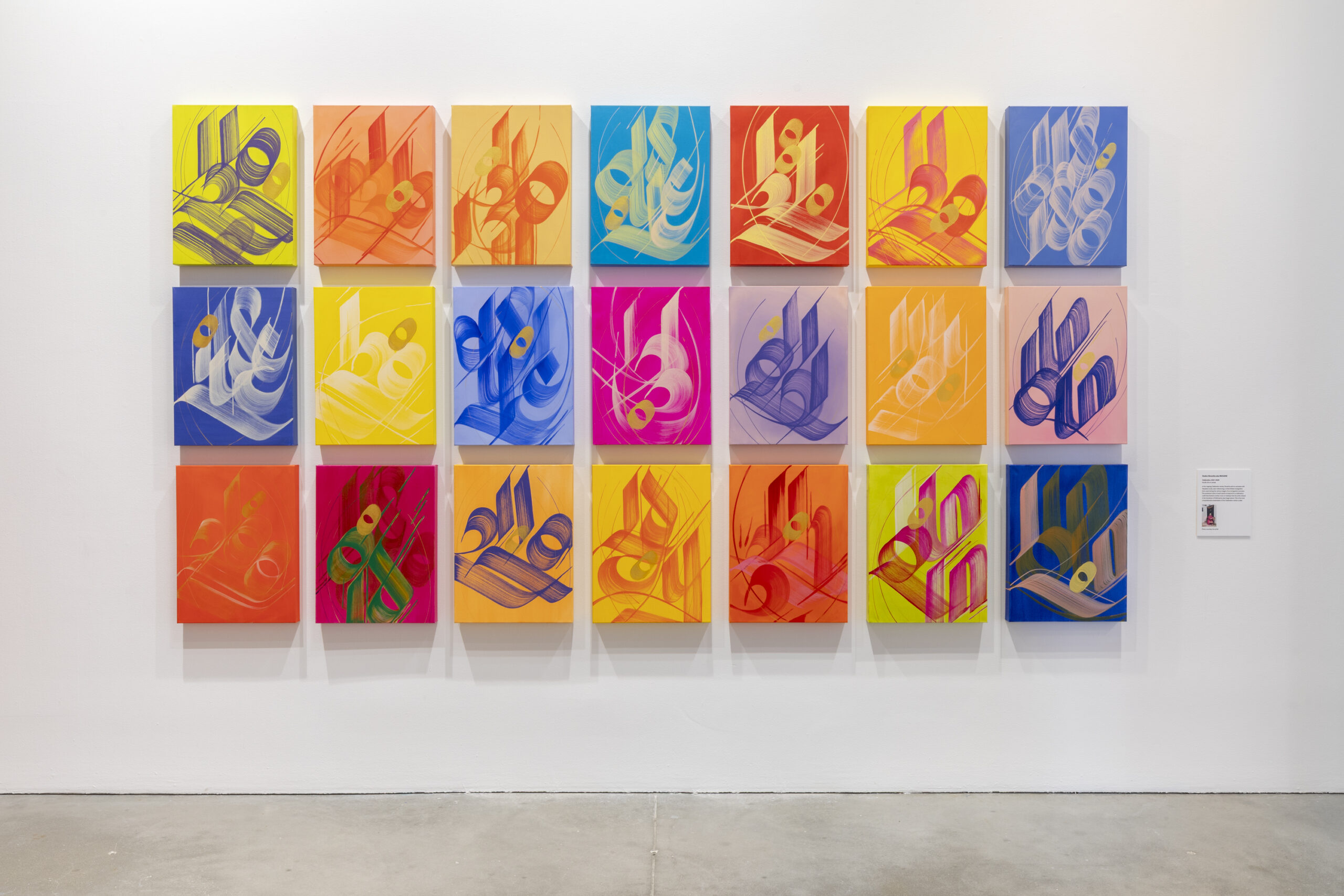
The Celebration series comes from that place. Each painting layers Nepali calligraphic forms drawn from the names of immigration documents people are required to complete over many years. The colour palettes are inspired by festive clothing worn by my mom during cultural celebrations that took place while the artist was away from home in Kathmandu. Even in her daughter’s absence, my mom continued to uphold traditions, dressing for celebrations and moving through life with dignity and resolve. The paintings carry the love and resilience of our loved ones across immigration distances.

Installation View of Celebration series at Institute of Contemporary Art, Boston. Photo by Mel Taing

What has been the proudest moment of your artistic career so far?

Being able to express myself in the most authentic way I can while simultaneously carrying my people with me and doing this as my career… All of it brings me so much joy and pride, so it’s hard to find the “proudest” moment.

I can tell you about my day yesterday, where I spoke about my recently acquired sculpture, Dwarpalika, at the Harvard Art Museums. I felt a lot of pride because the structure of the sculpture is inspired by the arched doorways of temples and traditional Newari homes in Kathmandu. The sculpture includes unsealed brass, a material historically used in ritual objects in Nepal and South Asia. Brass naturally patinas over time and is traditionally polished before important ceremonies. During the acquisition process, we discussed how the museum would care for the work. The brass can oxidise and be polished again, continuing the cycle of renewal that exists in its cultural context. It was important to me that the conversation include not just the preservation of the object, but the preservation of the tradition connected to it.

Museums shape how cultures are seen, understood and valued and… I feel pride that even long after I’m gone, Dwarpalika can contribute to keeping ancient traditions and narratives alive. It is so important for cultural stories to be told from and by the people of the culture.

The title Dwarpalika means temple guardian in Sanskrit, and I think of the work as guarding narratives and living traditions.

Dwarpalika, sculpture recently acquired by the Harvard Art Museums. Photo by Jane Louie

A few months into 2026, are there any artists or exhibitions inspiring you right now?

An exhibition that has deeply inspired me is An Indigenous Present, curated by Jeffrey Gibson and Jenelle Porter at the Institute of Contemporary Art Boston. The show brings together Native North American artists working across abstraction in various mediums. There was so much to love about this show: it was powerful to see an artist collaborate with an institution to tell an authentic story. What I loved most is how the exhibition challenges the conventional framing of what is “Indigenous art.” It shows works from elders to emerging artists, showing that cultural lineage and history is not something fixed or archival. I was inspired to think that maybe even more marginalised cultures can be seen in the present moment with ongoing cultural presence and living cultures as parts of active contemporary conversations.

Caroline Monnet’s work especially stood out to me. Monnet engages abstraction and architecture, and creates these visually strong structures that are telling stories from her Indigenous knowledge systems. This really resonated with my own practice.

Great Job Gerda Krivaite & the Team @ Our Culture Source link for sharing this story.

Trump calls death of Ayatollah Ali Khamenei the ‘single greatest chance for the Iranian people to take back their Country’ | Fortune

Trump calls death of Ayatollah Ali Khamenei the ‘single greatest chance for the Iranian people to take back their Country’ | Fortune

Iranian Supreme Leader Ayatollah Ali Khamenei was killed in a major attack on Iran launched by Israel and the United States, President Donald Trump said Saturday on social media.

Trump said his death is “the single greatest chance for the Iranian people to take back their Country.” The death occurred after a joint U.S. and Israeli aerial bombardment that targeted Iranian military and governmental sites.

The president also said “heavy and pinpoint bombing” was to continue “uninterrupted” through the week or longer.

There was no immediate comment from Iran. The assassination of the second leader of the Islamic Republic, who had no designated successor, would throw its future into doubt and raise the prospect of a protracted conflict given Iranian threats of retaliation.

Trump in his post called Khamenei “one of the most evil people in history.”

Trump said that Khamenei “was unable to avoid our Intelligence and Highly Sophisticated Tracking Systems and, working closely with Israel, there was not a thing he, or the other leaders that have been killed along with him, could do.”

In a nationally televised address, Israeli Prime Minister Benjamin Netanyahu said there were “growing signs” that Khamenei had been killed when Israel struck his compound early Saturday.

Shortly after the address, two Israeli officials said Israel had confirmed his death. The officials both spoke to The Associated Press on condition of anonymity pending a formal announcement and gave no further details.

Khamenei succeeded Ayatollah Ruhollah Khomeini, the leader of the 1979 Islamic Revolution. He had the final say on all major policies, leading Iran’s clerical establishment and its paramilitary Revolutionary Guard – the two main centers of power in the country’s theocracy.

As the attack on Iran unfolded, Trump urged the Iranian public to “seize control of your destiny” by rising up against the Islamic leadership. In a video announcing the “major combat operations,” Trump told Iranians that “when we are finished, take over your government. It will be yours to take. This will be probably your only chance for generations.”

Iranian state media, citing the Red Crescent, on Saturday evening said at least 201 people had been killed and more than 700 injured. Iran retaliated by firing missiles and drones toward Israel and U.S. military bases in the region, and exchanges of fire continued into the night.

Some of the first strikes on Iran appeared to hit near the offices of the 86-year-old Khamenei. Before Israeli officials confirmed the death, Iranian Foreign Minister Abbas Araghchi told NBC News that Khamenei and President Masoud Pezeshkian were alive “as far as I know.” He called the attack “unprovoked, illegal and absolutely illegitimate.”

The strikes during the holy fasting month of Ramadan opened a stunning new chapter in U.S. intervention in Iran, marking the second time in eight months that the Trump administration has attacked the Islamic Republic during talks over its nuclear program.

About 12 hours after the attacks began, the U.S. military reported no U.S. casualties and minimal damage at U.S. bases despite “hundreds of Iranian missile and drone attacks.” It said targets in Iran included Revolutionary Guard command facilities, air defense capabilities, missile and drone launch sites, and military airfields.

Various members of Iran’s leadership were targeted in the attack. Israel said it killed the commander of the Iranian Revolutionary Guard Corps and the country’s defense minister. The Israeli military also said its strikes killed the secretary of the Iranian Security Council, a close adviser to Khamenei.

Israel said the strikes had targeted three locations in Tehran where intelligence had indicated that top Iranian officials were gathered. Neither Iran nor the U.S. commented on or confirmed Israel’s claims about the Iranian leadership.

Even if Iran’s top leaders are killed, regime change is not guaranteed.

Democrats decried that Trump had taken action without congressional authorization. White House spokesperson Karoline Leavitt said the administration had briefed several Republican and Democratic leaders in Congress in advance.

The U.N. Security Council said it would meet Saturday afternoon. The U.N.’s nuclear watchdog said on X it was closely monitoring developments and had seen “no evidence of radiological impact.”

Iran was in a “near-total internet blackout,” advocacy group NetBlocks said.

Months of rising tensions

Tensions have soared in recent weeks as American warships moved into the region. Trump said he wanted a deal to constrain Iran’s nuclear program, as the country struggles with growing dissent following nationwide protests.

The trigger for Saturday’s strikes appeared to be the unsuccessful latest round of nuclear talks on Thursday. They also reflected dramatic changes that have left Iran’s leadership in its weakest position since the Islamic Revolution nearly half a century ago.

Israeli and American strikes last June greatly weakened Iran’s air defenses, military leadership and nuclear program. A regionwide conflict sparked by Hamas’ Oct. 7, 2023, attack on Israel has left Iran’s network of proxies across the Middle East greatly weakened. U.S. sanctions and global isolation have decimated Iran’s economy.

Iran responded to the latest strikes by launching missiles and drones targeting Israel and strikes targeting U.S. military installations in Bahrain, Kuwait and Qatar. Israel’s military said Iran fired “dozens” of missiles at Israel, with many intercepted. Emergency responder Magen David Adom noted 89 “lightly injured” people.

At least three explosions were heard Saturday evening near the Intelligence Ministry building in northern Tehran, witnesses said, adding that air defense systems had begun operating there. Israel’s military said it had begun new strikes against missile launchers and aerial defense systems in central Iran.

In southern Iran, at least 85 people were reported killed when a girls’ school was struck, and dozens more were wounded, the local governor told Iranian state TV.

Capt. Tim Hawkins, a U.S. Central Command spokesperson, said he was “aware of reports” that a girls’ school was struck and they were looking into them.

Iran’s state news agency IRNA said at least 15 people were killed in the southwest, quoting the governor of Lamerd, Ali Alizadeh, as saying a sports hall, two residential areas and a hall near a school were hit.

Flights across the Middle East were disrupted, and air defense fire thudded over Dubai, the United Arab Emirates’ commercial capital. Shrapnel from an Iranian missile attack on the UAE capital killed one person, state media said.

Attack was coordinated between Israel and US

“Active and serious negotiations have yet again been undermined,” Oman’s Foreign Minister Badr al-Busaidi, a key mediator of the nuclear talks, said on X. “Neither the interests of the United States nor the cause of global peace are well served by this.”

Israel said the operation has been planned for months with the United States. Air Force pilots were striking “hundreds of targets across Iran,” Israeli military chief of staff Lt. Gen. Eyal Zamir said in a statement.

Targets in the Israeli campaign included Iran’s military, symbols of government and intelligence targets, according to an official briefed on the operation, who spoke on condition of anonymity to discuss nonpublic information on the attack.

Trump, in seeking to justify the military action, claimed Iran has continued to develop its nuclear program, despite asserting last year the program had been “obliterated” by an earlier round of strikes.

He acknowledged Saturday that there could be American casualties, saying “that often happens in war.” It was a notable statement from a U.S. leader who swept into office on an “America First” platform and vowed to keep out of “forever wars.”

Trump also said he was aiming to “annihilate” the Iranian navy and destroy regional proxies supported by Tehran. He called on the paramilitary Iranian Revolutionary Guard to lay down arms, saying members would be given immunity or face “certain death” if they didn’t.

Iran had said it hoped to avert a war, but maintained its right to enrich uranium. It did not want to discuss other issues such as its long-range missile program or support for armed groups like Hamas and Hezbollah.

Iran has said it hasn’t enriched since June, but it has blocked international inspectors from visiting the sites the U.S. bombed. Satellite photos analyzed by The Associated Press have shown new activity at two of those sites, suggesting Iran is trying to assess and potentially recover material.

Iran on Saturday requested an urgent session of the International Atomic Energy Agency’s Board of Governors about “these threats to safeguarded nuclear facilities,” according to a letter posted by the semiofficial Tasnim news agency.

Trump had threatened military action but held off following Iran’s recent crackdown on protests spurred by economic grievances that evolved into a nationwide push against the ruling clerics.

The Human Rights Activists News Agency says it confirmed more than 7,000 deaths in the crackdown and is investigating thousands more. The government has acknowledged more than 3,000 killed.

Now, Iranians are likely to be wary about taking to the streets again because the Revolutionary Guard has demonstrated its ruthlessness, said Kamran Matin, an expert on Iran at the University of Sussex in southern England.

Regional effects

The strikes could rattle global markets, particularly if Iran makes the Strait of Hormuz unsafe for commercial traffic. A third of worldwide oil exports transported by sea passed through the strait in 2025.

Saudi Arabia said Iran had targeted its capital and eastern region in an attack that was repelled. Bahrain said a missile attack targeted the U.S. Navy’s 5th Fleet headquarters in the island kingdom, and three buildings were damaged in the capital, Manama, and Muharraq city by drone strikes and debris from an intercepted missile.

Kuwait’s civil aviation authority said a drone targeted the main international airport, injuring several employees. Kuwait’s state-run news agency said three troops were injured by shrapnel from strikes that hit Ali Al-Salem air base. Explosions could also be heard in Qatar. Jordan said it “dealt with” 49 drones and ballistic missiles.

Great Job Jon Gambrell, Konstantin Toropin, Josh Boak, Aamer Madhani, The Associated Press & the Team @ Fortune | FORTUNE for sharing this story.


‘The Poster Boy for the Illiterate’: Jesse Waters Takes a Swipe at Gov. Newsom But Ends Up Making a Fool Out of Trump’s Struggle to Read Instead

‘The Poster Boy for the Illiterate’: Jesse Waters Takes a Swipe at Gov. Newsom But Ends Up Making a Fool Out of Trump’s Struggle to Read Instead

Fox News personality thought he was laying into California Gov. Gavin Newsom with below-the-belt insults about his intelligence.

Instead, the primetime host intensified the spotlight on Donald Trump’s history of being the dullest leader the country has experienced in modern times. Newsom became the subject of headlines when soundbites of him discussing his 960 SAT score and struggles with dyslexia began circulating from his “Young Man in a Hurry” book tour stop in Atlanta on February 22.

‘The Poster Boy for the Illiterate’: Jesse Waters Takes a Swipe at Gov. Newsom But Ends Up Making a Fool Out of Trump’s Struggle to Read Instead
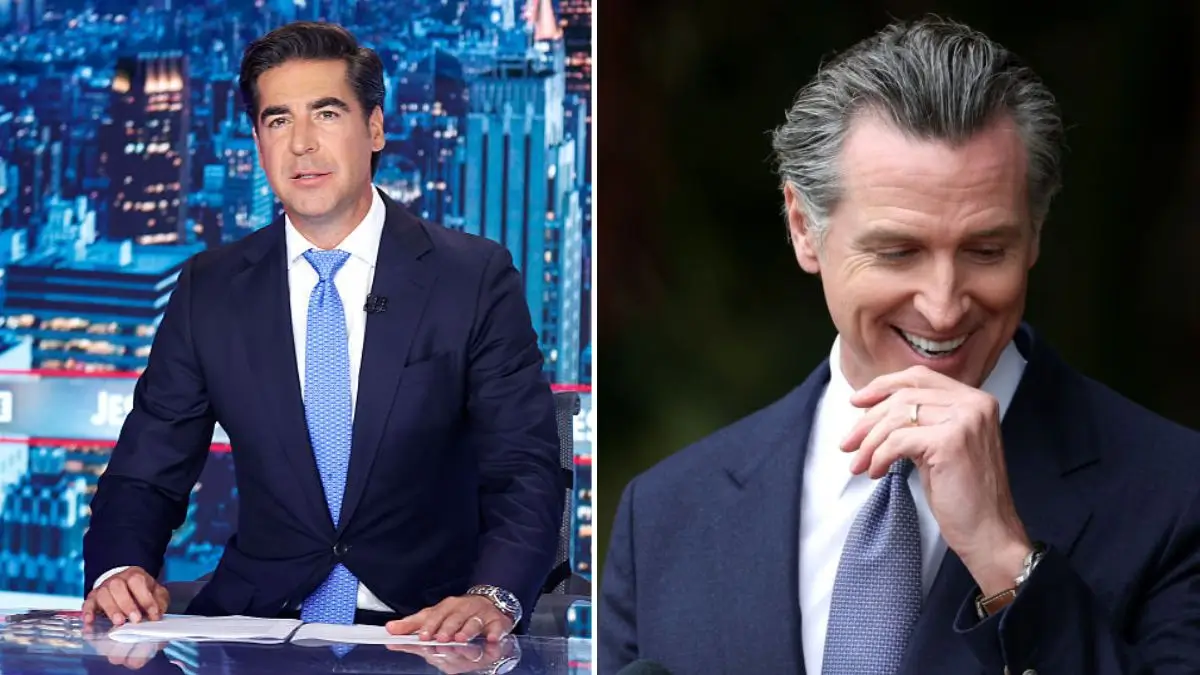
Jesse Watters humiliates President Donald Trump in a shocking moment after failing to land a joke at Gavin Newsom. (Photos by John Lamparski/Getty Images); Justin Sullivan/Getty Images)

‘3rd Grader Reading in Front of Class‘: Trump’s Rambling State Dinner Speech Sparks Laughter After Fans Zoom In on His Struggle to Read Simple Lines

The governor was sharing takeaways he hoped readers would receive from the book with Mayor Andre Dickens  — that his story is like everyone else’s, full of moments of “resilience, redemption, humility, and grace.”

Conservatives labeled the viral moment an attempt at pandering to Black voters ahead of Newsom’s suspected 2028 presidential campaign launch. To date, he has not made a public decision about entering the race. Trump participated in the bandwagon movement picking apart his political rival.

In a Truth Social post, he wrote, “Wow! Gavin Newscum just dropped out of the Presidential Race!!!” Watters led his broadcast attack on the Democrat by saying, “Gavin’s got a new pitch, ‘I’m dumb. I’m just as stupid as you are.’ Kind of a funny way to run for president.”

He continued, “Personally, I want a president with good test scores, but that’s just me… I don’t want a president who scores poorly. I don’t want a president who struggles to read. I want a really smart president.”

Newsom hit back on X, retweeting a snippet of the comments with the caption, “Jesse, you already have one.” His dragging of Trump was echoed across the social platform, with multiple people pointing out that Watters’ criteria for president do not apply to the 79-year-old Republican.

One user sarcastically responded, “This is the first time I’ve heard Watters say anything negative about Trump.” A second person rhetorically asked, “How about one who makes up words, Jesse? Or makes up numbers? Makes up facts? Where’s your line in the sand, bro?”

A third individual declared, “Trump is the poster boy for the illiterate.” Numerous people also resisted Trump’s flubbed public remarks, including him botching words like acetaminophen and indisputable, completely slurring others, and stumbling through prepared speeches.

Last year, Trump comically admitted, “Smart people don’t like me,” haphazardly confirming critics’ discourse about his lack of intelligence. The moment is one of several that have made his presidency a joke and a disgrace to millions.

The twice-impeached leader defied the jokes when he bragged, “I read very well. Great comprehension,” while criticizing the Supreme Court’s ruling against his sweeping tariffs in late February.

A detractor’s reaction to the assertion reads, “He can barely function when reading. When reading from the speech he sounds like a Child Trying to figure out what the words are.” At least one person hoped that Watters’ commentary was a subtle way of announcing his disapproval of the president. That person tweeted, “So then he is FINALLY sick of Trump.”

Others mocked Trump’s shortcomings by resharing footage of him falling asleep during diplomatic meetings, when he appeared weathered and decrepit, close-ups of his bruised hands, and resurfaced nicknames like “Dozy Don” and “President Slurring J. Strokes.”

The administration denies that his health is declining and argues that his naps are a listening tactic, but the public doesn’t believe that spin on what everyone is witnessing. Yet, they have not addressed whether Trump’s inability to read.

Great Job Angelina & the Team @ Atlanta Black Star for sharing this story.

Shane Lowry and Austin Smotherman tied for the Cognizant Classic lead at 13 under

Shane Lowry and Austin Smotherman tied for the Cognizant Classic lead at 13 under

PALM BEACH GARDENS, Fla. – Shane Lowry has yet another chance to win at PGA National.

The native of Ireland who now calls South Florida home had a bogey-free round of 8-under 63 on Saturday, moving to 13 under and finishing with a share of the lead following three rounds of the Cognizant Classic.

He’s tied with Austin Smotherman, who battled his way to a 69. Lowry said his goal going into Saturday — which had tee times moved up because of anticipated bad weather — was just to get into one of the final two groups for Sunday, then did a little better than that.

“You want to be near the leaders, keep an eye on them and see what they’re doing,” Lowry said. “If the conditions are like this tomorrow, there (are) low scores out there, so someone could come from the pack. It’s not necessarily easy to lead around this golf course. There’s a lot of very difficult shots. But I’m up there where I want to be. I’ve had a few chances to win this tournament, and hopefully I can convert it tomorrow.”

He’s had more than a few. It’s almost become an annual tradition.

Lowry was second in 2022 when the event was still called the Honda Classic, losing the lead in a most bizarre fashion at the end — getting caught in a deluge that wreaked havoc on the final hole. Sepp Straka wound up winning by one shot, and Lowry wound up getting soaked.

“You get good breaks and bad breaks, and that was a bad break,” Lowry said. “Yeah, we’ll see. Hopefully none of that tomorrow.”

He tied for fifth at PGA National a year later, had the solo lead going into the final round of the Cognizant before finishing tied for fourth in 2024, then tied for 11th last year.

“There wasn’t much wind out there, so there’s certain things that aligned today to make it play easy enough, wind direction being one of them,” Lowry said. “But you still need to go out there and hit the shots. The greens are firm. It can get away from you if you’re not hitting the ball well. I felt like I did everything pretty good today.”

It seemed like things tried to get away from Smotherman — who led after Rounds 1 and 2 as well — a few times on Saturday, but he held it together just enough to finish knotted for the top spot.

Back-to-back bogeys on the par-4 6th and the par-3 7th threatened to throw his round off-stride, but a birdie-birdie finish might have given him a little momentum headed into Sunday as he seeks what would be his first PGA Tour victory.

“Most excited for tomorrow,” Smotherman said. “Hitting golf shots in front of all these fans and hearing people yelling your name and refocusing and trying to do it again the next shot, I think it’s a fun challenge. Start of the week, this is what you kind of prep and play for. Not that you expect to be there, but when you are there, you know you’re ready, and I feel like I am ready.”

Nico Echavarria (66) and Taylor Moore (67) were a shot back at 12 under, and Jimmy Stanger — who’ll earn a check on tour for the first time since April 2024, after spending the last two years dealing with serious elbow issues — is alone in fifth at 11 under after shooting a 65 Saturday.

“It just feels good to be back,” Stanger said. “It feels good to be playing a weekend. It’s been a couple years. It’s good to be healthy. It’s just a cherry on top to be in contention here this week.”

Moving Day, as Saturdays tend to be called on tour, had some movers.

Lowry’s 63 tied Patton Kizzire for the round of the day; Kizzire moved up 45 spots into a tie for ninth at 8 under. Keith Mitchell and Beau Hossler both shot 64s to join Kizzire there, five shots behind the leaders.

___

AP golf: https://apnews.com/hub/golf

Copyright 2026 The Associated Press. All rights reserved. This material may not be published, broadcast, rewritten or redistributed without permission.

Great Job Associated Press & the Team @ KSAT San Antonio for sharing this story.

Secret Link