

Home News Page 5

Flipping houses: How investors are thriving in today’s property market

Flipping houses: How investors are thriving in today’s property market

ShutterStock royalty-free image #98717288, ‘Fragment of a nice house with gorgeous outdoor landscape in Vancouver, Canada.’ uploaded by user #228988681, retrieved from ShutterStock on April 23rd, 2025. License details available at https://www.shutterstock.com/license, image licensed under the ShutterStock Standard Image License

If you were to drive through any neighborhood, you’d spot them: properties with fresh paint, new landscaping, and a “For Sale” sign going up within months of being purchased. You would think in today’s market, flipping houses wouldn’t be profitable, but here’s what separates successful flippers from those who lose money: they know which properties to buy, which renovations actually add value, and when to sell. Real estate investing done right turns rundown properties into profitable ventures through smart buying, renovations, and timing.

Flipping houses is alive and thriving, but not the way TV shows portray it. The investors making real money aren’t getting rich on six-week timelines with HGTV budgets; they’re following proven systems that consistently turn a profit even when everyone else panics about market conditions.

Ready to understand how investors are actually building wealth through a property flipping guide while others sit on the sidelines?

The Current State of Real Estate Investing

Today’s property market looks nothing like the pre-2020 landscape where you could throw darts at a map and find profitable flips. After 2020, it became clear that mortgage rates are now higher, and inventory remains tight in desirable areas, and renovation costs haven’t come back down. Yet experienced flippers are adapting and finding opportunities that newcomers overlook.

According to ATTOM’s Q3 2025 data reported by The Motley Fool, flipped homes represented 6.8% of all home sales, with average gross profits at $60,000 and ROI at 23.1%. Those numbers tell you investors are still finding ways to profit despite tougher conditions. The key lies in being selective about which properties to tackle and knowing your local market intimately.

Where Smart Money Is Moving

Investors who thrive focus on emerging neighborhoods rather than chasing established hot spots where competition drives purchase prices too high. They target properties needing cosmetic work, but with solid bones, as foundation issues eat profits faster than anything. The winning strategy involves buying below market value, controlling renovation costs, and selling at the right moment.

Is Flipping Houses Profitable?

Profitability depends entirely on your purchase price; get that wrong and no amount of renovation genius saves you. Investopedia explains that successful flippers typically follow the 70% rule: pay no more than 70% of the after-repair value, not including renovation costs. You need to buy low enough that after renovation costs, carrying costs, and selling expenses, you still pocket a meaningful profit.

Most investors target gross profit margins of 20 to 30% on each flip, though that varies by market. In expensive markets like California, you might need six-figure gross margin profits to justify the risk. Cheaper markets in the Midwest might deliver solid returns on $40,000 to $50,000 profits because your initial investment stays lower.

The investors who consistently profit treat flipping houses like running a business with tight budgets and realistic timelines. They’re not gambling on appreciation, they’re creating value through smart renovations and efficient project management.

How Much Money Do You Need to Start Flipping Houses?

You’ll need more capital than you think, as you’ll need to cover the down payment or cash purchase, renovation costs, carrying costs, and a buffer for unexpected problems. All-cash flippers might need a minimum of $100,000 to $200,000, depending on their market. Those using financing still need $30,000 to $50,000 to get started properly. 

Renovation budgets eat cash fast. Kitchen and bathroom remodels alone can run $15,000 to $40,000 each. Experienced flippers pad their budgets by 10 to 20% because surprises always pop up once you open walls or start working on systems. 

Creative Financing Options

Hard money lenders specialize in funding house flips, offering short-term loans based on the property’s after-repair value rather than your credit score. Services like Cash Out Your Home provide options for sellers looking to offload properties quickly, creating opportunities for investors to find deals.

Home Renovation Tips That Add Value

Not all renovations return equal value: some improvements barely move the needle, while others dramatically increase your sale price. Focus your budget on kitchens and bathrooms first since these spaces influence buyers more than any other rooms. Fresh, modern kitchens with updated appliances and contemporary bathrooms with good lighting consistently deliver the best returns.

Curb appeal matters more than most flippers realize. A fresh exterior paint job, updated landscaping, and a new front door make buyers willing to pay premium prices. You’re selling a feeling, not just a house, and that feeling starts the moment buyers pull up.

What to Skip

Pools rarely add value equal to their installation cost in most markets. The same goes for overly personalized features, such as elaborate built-ins or unusual color schemes. Stick with neutral, contemporary finishes that appeal to the broadest buyer pool.

Building Your Flip Team

You can’t flip houses profitably working solo unless you’ve got serious construction skills. Successful flip strategies require assembling a reliable team: contractors you trust, real estate agents who understand your business, and inspectors who catch problems early.

Finding good contractors makes or breaks your timeline and budget. Interview multiple candidates, thoroughly check references, and start with smaller projects to test their work. Pay them fairly and on time; good contractors who deliver quality work on schedule are worth their weight in gold.

Frequently Asked Questions

How Long Does It Take to Flip a House?

Most flips take 3 to 6 months from purchase to sale, but timelines vary based on renovation scope. Light cosmetic updates might take 6 to 8 weeks, while major renovations can take 6 to 9 months. Factor in another 1 to 2 months for the selling process.

What’s the Biggest Mistake New Flippers Make?

Overestimating the after-repair value and underestimating renovation costs kills more flips than anything else. New flippers fall in love with properties and convince themselves they can sell for more than the market supports. They also lowball renovation budgets, forgetting permits and the inevitable surprises that lurk in old houses.

Profit From House Flipping

Flipping houses in today’s market demands more sophistication than ever, yet investors who understand the fundamentals still profit consistently. You need realistic budgets, reliable teams, and discipline to walk away from deals that don’t pencil out.

Start small, learn from every flip, and build systems that let you scale once you’ve proven you can execute profitably. The investors thriving didn’t get there by luck; they got there by treating flipping as a serious business.

Black America Web offers more content on where knowledge meets opportunity, including financial literacy and real estate insights that help you build wealth.

Great Job Re'Dreyona Walker & the Team @ Black America Web for sharing this story.

Joel Quenneville reaches 1,000 victories, joining Scotty Bowman in an elite club for NHL coaches

Joel Quenneville reaches 1,000 victories, joining Scotty Bowman in an elite club for NHL coaches

ANAHEIM, Calif. – Joel Quenneville’s 1,000th career victory as an NHL head coach was so dramatic that he almost had to be reminded of the milestone when the clock finally hit zeros on the Anaheim Ducks’ 6-5 comeback win.

When Quenneville stood at center ice with his wife, his daughter and his entire team for a postgame photo moments later Wednesday night, he allowed himself a moment out of the hockey grind to appreciate history.

“I wasn’t prioritizing the number,” Quenneville said after joining Scotty Bowman in the most exclusive hockey coaching club. “I just wanted to play well tonight and find a way to win. That was the motivation, and it turned out to be a very special one as well.”

His Ducks rallied to beat two-time defending conference champion Edmonton in their return from the Olympic break, overcoming a pair of two-goal deficits and another one-goal deficit during their frenetic four-goal third period.

Cutter Gauthier scored the winner with 1:14 to play, and Anaheim hung on for its NHL-leading eighth multigoal comeback win during its first year under Quenneville, whose players all gathered at the bench to mob their coach after the whistle.

“It was an important game for us in a lot of ways,” said Quenneville, who has the second-place Ducks in the Stanley Cup playoff race for the first time since 2018. “They had the puck a lot more than we did, but at the same time, I thought we found a way to win a game. It had other meanings, but to me it was the importance of where it put us in the standings, and coming out of the break, the momentum that we could get off a win like tonight.”

The 67-year-old Quenneville received some fine bottles of wine and cigars among his postgame gifts, but he planned to celebrate just with a beer.

The second member of the 1,000-win club took a long time to join Bowman, who got his 1,000th with the Detroit Red Wings on Feb. 8, 1997 — just a month after Quenneville coached his very first game with the St. Louis Blues.

Quenneville reached the mark in his 1,825th game of a career highlighted by three Stanley Cup championships with the Chicago Blackhawks. Bowman finished his career in 2002 with 1,244 victories in 2,141 regular-season games, also winning nine Stanley Cup titles as a coach.

“He’s from a different league when I look at his company,” Quenneville said about Bowman, who was a senior advisor of hockey operations to his son, general manager Stan Bowman, during the Blackhawks’ successful run under Quenneville.

“I think he’s lonesome up there, the number he’s at,” Quenneville added. “I had Scotty and Stan in Chicago together. We had some great wins, and he’s got a lot of Cups. He’s been very successful in the game. … I’m happy to be getting the opportunity back in the game and be around a team like we’ve got now.”

Quenneville has made a successful return to the NHL this season in Anaheim after a four-year absence from the league following his resignation from the Florida Panthers in late 2021 over his inaction during the Blackhawks’ sexual abuse scandal 11 years earlier.

Quenneville’s NHL ban was lifted in July 2024, and the Ducks hired him one year later to take over a struggling franchise with no playoff appearances in seven consecutive seasons. Anaheim (31-23-3) has vaulted into the thick of the Western Conference playoff race in its first season under Quenneville, who has led his teams to the playoffs in 20 of the 22 NHL seasons he finished behind a bench.

When asked if there were times when he wondered whether he would have a chance to reach 1,000 wins, Quenneville replied: “It’s something that I don’t think about. I think my motivation, my goals were always once you win a Cup one time, you can’t wait to do it again. It’s always been the reason why we’re doing what we’re doing.”

After playing 13 NHL seasons as a sturdy defenseman with the signature bristly mustache he has sported for his entire adult life, Quenneville has been an NHL head coach for parts of 26 seasons, and he has won at every stop.

He led the Blues to seven consecutive playoff appearances before his firing. Quenneville then lasted just three seasons in Colorado despite producing two playoff teams.

He replaced Denis Savard behind the Blackhawks’ bench in 2008 and led the Original Six franchise to eight straight playoff appearances and three championships — including the 2010 Stanley Cup, which ended the NHL’s longest active drought at 59 seasons.

Quenneville joined the Panthers in April 2019, but his third season in Florida ended abruptly when the NHL banned him along with Stan Bowman and Al MacIsaac “as a result of their inadequate response upon being informed in 2010 of allegations that Blackhawks player Kyle Beach had been assaulted by the club’s video coach,” the league said.

NHL Commissioner Gary Bettman determined Quenneville had showed remorse for his inaction on the allegations that surfaced during Chicago’s playoff run to a Stanley Cup title. Quenneville said he also worked with advocacy groups to study the proper ways to lead in such situations.

Quenneville remained intently focused on the NHL during his four years away from the bench, watching games every night on television from his home in Florida and staying in contact with his countless friends in the game. Those friends included Pat Verbeek, his former teammate with the Hartford Whalers and the Ducks’ general manager.

Verbeek fired Greg Cronin and persuaded owner Henry Samueli to take the potential risk and the definite public-relations hit of hiring Quenneville. The move has worked out splendidly on the ice so far, with the Ducks dramatically improving their record with a talented young core gaining another year of experience.

Bowman and Quenneville could be joined in the 1,000-win club by two more veteran coaches within the next few seasons.

Paul Maurice, who won the past two Stanley Cup titles with the Panthers, has 945 career victories with five teams. Lindy Ruff earned his 933rd career victory Wednesday night with the Buffalo Sabres’ 2-1 win over New Jersey.

___

AP NHL: https://apnews.com/NHL

Copyright 2026 The Associated Press. All rights reserved. This material may not be published, broadcast, rewritten or redistributed without permission.

Great Job Greg Beacham, Associated Press & the Team @ KSAT San Antonio for sharing this story.

Nebo Mountain Fire in Gillespie County burns over 1K acres

Nebo Mountain Fire in Gillespie County burns over 1K acres

The Nebo Mountain Fire in Gillespie County is now 100 percent contained. 

Crews from across the state battled the 1,160-acre fire in north Gillespie County.

The backstory:

Fire officials have labeled it as the Nebo Mountain Fire, located 16 miles north of Fredericksburg, spanning from Exxon Road to Legion Creek Road.

Multiple fire crews were involved with the fire’s containment, including Fredericksburg Fire/EMS Department, Texas A&M Forest Service, as well as agencies from across the county, region, state, and country. Crews from the state of Utah were seen by FOX 7 assisting with the fire.

As of Wednesday night, the Texas A&M Forest Service reported that the fire was 100% contained. This comes after crews battled the flames for well over 24 hours after the fire was first sighted on Tuesday afternoon around 2:17 PM. 

For local fire units, assistance from state and regional crews made all the difference in the fire’s containment.

Nebo Mountain Fire in Gillespie County burns over 1K acres

“Our local crews have great equipment, we have great personnel, but a fire the size and scope of this one at Nebo Mountain, you just can’t fight at a local level,” says Sean Doerre, with Fredericksburg Fire & EMS. 

On Wednesday, the Texas A&M Forest Service used aerial units to attack certain points of the wildfire.

“Without that air attack and the ground crew that they brought in, this could have been a much worse situation,” says Doerre.

In total, 100 crew members were estimated to be on the ground battling the flames, with it being reported that none of the fire spread outside established containment zones. Two outbuildings were lost in the fire, but no evacuation orders were given for the surrounding areas.

Gillespie County Judge Daniel Jones also issued a declaration of disaster, authorizing necessary emergency actions, including road closures and controlled access. The declaration also strongly discouraged all hot works, including grinding, cutting with a torch, and welding.

Dig deeper:

With dry conditions stretching across Central Texas and much of the state, officials are now urging that caution is the best tool to keep another wildfire from striking.

“The conditions are ripe for another wildfire to break up, so anything that could cause a spark we want them to avoid,” says Doerre.

The National Weather Service has issued a Red Flag Warning from 11 a.m. to 7 p.m. on Thursday, Feb. 26, with north winds at 10 to 15 mph with gusts up to 25 mph.

A dry cold front arriving Thursday will shift winds to the north and further increase fire danger, with no precipitation expected.

The Source: Information from interviews conducted by FOX 7 Austin’s Marco Bitonel and the Texas A&M Forest Service

FredericksburgWildfires

Great Job & the Team @ Latest & Breaking News | FOX 7 Austin for sharing this story.

Good Luck, Have Fun, Don’t Die Is the Burned-Out End of Something

Good Luck, Have Fun, Don’t Die Is the Burned-Out End of Something

While watching the new movie in theatrical release, Good Luck, Have Fun, Don’t Die, an eccentric experiment in dystopian sci-fi black comedy adventure, you might be inclined to wonder what ever happened to Gore Verbinski.

He’s the film’s director and was once a hugely successful figure in the American film industry. His breakout was the kinetic slapstick comedy Mouse Hunt (1997), which became a global hit. The remarkably spooky The Ring (2002) demonstrated his range when working in film genres, showing it was possible to remake a Japanese horror film in American terms and get something excellent out of it. His splendidly oddball and enormously popular Pirates of the Caribbean trilogy (2003–7) put him on top of the Hollywood heap. And his brilliantly scabrous Rango (2011), which deserved and won the Best Animated Feature Oscar, showed us how fantastic CGI animated films might have been if the cutesy Disney–Pixar approach hadn’t so dominated the genre.

Verbinski always took big swings at whatever he tackled, as his short record of immense hits and disastrous misses attests. The Lone Ranger (2013) was so protracted and troubled a production, and cost so ungodly much and was so badly received, that it cast a long shadow over his subsequent career. He began to back off from directing, attaching himself to projects and then either dropping out or retreating to a producer-only role. He also went off and got involved with computer gaming. When he eventually returned as a director with A Cure for Wellness (2016), it bombed. Since then, Verbinski the director has been missing in action for ten years.

Still from Good Luck, Have Fun, Don’t Die. (Briarcliff Entertainment)

Good Luck, Have Fun, Don’t Die has gotten mixed reviews, including several avid welcome-back appreciations from critics recalling Verbinski’s former liveliness. But it’s tanking at the box office. And the public is right — the film is DOA onscreen. It’s so strangely ineffectual that the main fascination, as the images crawl by, is trying to figure out why none of it is working.

Verbinski pulls out all the stops trying to make the movie pop with energy. It’s up-to-the-minute in its topicality, with the looming threat of AI central to the plot, and it’s riddled with big close-ups, fast cuts, and satirical commentary on contemporary mores.

It opens on a brisk montage characterizing Norms diner in LA — panning down the retro NORMS sign (“norms,” get it, as in social norms that are proving to be disastrous for the human race). It bobs through eye-filling shots of a piece of pie being delivered to a patron at the counter, hamburgers being grilled, coffee cups being refilled, jotted orders being attached to a spinning rack, and so on, all while the diner patrons, mesmerized by their cell phones, fail to respond to the busy server’s remarks.

Suddenly a man bursts into Norms. He’s dirty, bearded, dressed in a see-through plastic coat wired up with tubes and other oddments. He’s immediately assumed to be a mentally ill unhoused man. He’s shouting something about having come from the future to save humanity from its catastrophic course toward technological Armageddon. He’s trying to recruit a team from the roughly forty patrons in the diner to come and help him complete his world-saving mission.

And it would be a mistake to call the cops on him, he says — though one of the servers already has — since he’s wired with bombs. Plus, he carries a portable button that, if pushed, resets the whole scenario so he can try again to get the right combination of diner patrons to save the world.

This, he claims, is his one-hundred-and-seventeenth try. He has the tired but wired glee of an obsessed gamer who’s prepared to carry on like this indefinitely.

Sam Rockwell plays the never-named man from the future. Rockwell is a fine actor, and he gives it everything he’s got. But for all the noisiness and activity of his character, the weird inertia of the film drags him down. Everything that’s happening in the long first sequence in the diner is overexplained and overemphasized and runs on too long.

After all, we’re familiar with movies in which characters from the future show up here trying to get people to do urgent things. We’ve seen dystopian sci-fi films with time-travel plotlines, and we don’t need to see lengthy harangues and multiple attempts at persuasion before the main characters are simply forced to do the urgent things that must be done or there’s no movie.

Famously, in Terminator (1984), the pitch to accompany the future-guy who’s trying to save the world was accomplished in eight words: “Come with me if you want to live.”

Verbinski adds a flashback structure to an already busy movie, so we can learn about several of the seven-member team he eventually recruits from the diner to go on the dangerous mission. Flashback structures can work wonderfully, but here again, the detail-filled sequences tend to run quite long, and they occur at points when, perhaps, they’re too much of an impediment to the action. After the diner scene, it’s definitely time to move, and we seem to trip over a long character bio at every turn. Possibly the original plan for Matthew Robinson’s script, which was to create a TV series out of it, made more sense.

It’s not the cast’s fault. Verbinski has assembled an interesting and talented but star-free group of leads. Included among them are Michael Peña (Jack Ryan, Cesar Chavez) and Zazie Beetz (The Bad Guys, Joker) as cowed teachers in a totally dysfunctional school system where high school students refuse to part with their cell phones and hardly look up from them in class. Juno Temple (Fargo, Ted Lasso) plays a bereaved mother who’s lost her teenage son in one of the endless series of school shootings occurring all over the country. She’s soon drawn into a hush-hush government program that offers to clone school shooting victims, but its crudely routinized tech processes end up creating clones that look like the victims but have distressingly generic personalities. Haley Lu Richardson (The White Lotus, After Yang, The Edge of Seventeen) plays an edgy young woman wearing a bedraggled princess costume who’s literally allergic to technology, which has made her life so impossible that she’s all too willing to go on what’s clearly a suicide mission.

There are several others we barely get acquainted with before they’re killed by the militarized police or the heavily armed thugs in pig masks who’ve been assigned to stop the man from the future. One woman recruit had come to the diner seeking just a few minutes’ respite from the horrendously difficult life she’s leading that is now the norm for almost everyone. “I just wanted a piece of pie,” she says plaintively right before she’s shot down with an excess of gunfire that’s nauseating.

Good Luck, Have Fun, Don’t Die Is the Burned-Out End of Something
Haley Lu Richardson in Good Luck, Have Fun, Don’t Die. (Briarcliff Entertainment)

And of course, there’s the man from the future who’s traveled back in time from a sunless, depopulated postapocalyptic world where, as a child, all he had was his tech-phobic mother, until she got assassinated in a drone strike. His mission to avert that dystopian hellscape involves time travel back to the point where a heavily guarded nine-year-old genius in a suburban house completes the AI program that will lead to its takeover of the world and the drastic depletion of resources that ends most of humanity. All the man from the future wants to accomplish is plugging in a tiny hard drive to the boy’s computer system that adds a security feature limiting the worst of the AI outcomes.

AI itself can’t be stopped, he says: “It’s an inevitability in all timelines.”

And perhaps that’s the deciding factor that makes the movie such a slog. It may actually be too topical. It immerses us in things we worry about every day, urged on by frenzied social media commentary. We feel so sickened and helpless about these things — America’s rampant school shootings; the cratering educational system; the increasing atomization of our tech-addled society; the hostile militarization of the police force and the shady fascistic government forces unleashed with guns aimed squarely at the American people; and the looming AI juggernaut that seems to threaten the environment, the economy, the world of aesthetics, and human expression; and the job prospects of workers everywhere all at once.

Every scene in the film is there to illustrate these intractable social ills, and the man from the future rants about them in didactic monologues. And we’re already so overfamiliar with them anyway that satirical dark comedy seems redundant. We’ve seen all the memes already.

In the later stages of the big chase scene, an army of zonked-out teenagers under the control of their cell phones marches on our motley crew of rescuers, who try to board themselves into a suburban house and fight them off, zombie-film style. It’s unclear what these “zombies” can do to hurt anyone, since they only walk forward staring at their phones. But far worse than that: it’s such a tired idea, it revives in your mind for a moment the tired insult, “Okay, boomer.”

And maybe that’s the leading quality of the movie: exhaustion. It’s a movie about starting a revolutionary action to save the world that plays like the burned-out end of something.

Great Job Eileen Jones & the Team @ Jacobin Source link for sharing this story.

Writing Our Way to Wellness: Khadee Roberts on Healing

Writing Our Way to Wellness:  Khadee Roberts on Healing

Guest Contributor: Khadee Roberts, Founder of Lune & Line

What does Black Mental Wellness mean to you?

Black mental wellness means having the space, language, and permission to tend to our inner lives without shame, silence, or survival mode being the default. It’s the ability to acknowledge both our strength and our vulnerability, and to access tools that honor our lived experiences, histories, and realities. For me, it means creating room to process life honestly while still moving forward whole.

How do you promote change and well-being in the Black community?

By creating accessible, culturally grounded tools that support emotional processing during real life transitions. Through Lune & Line, I focus on normalizing reflection, self-awareness, and intentional care, especially around experiences that are often minimized or carried in silence. My work centers on meeting people where they are, honoring lived experience, and offering practical resources that encourage healing, clarity, and forward movement in everyday life.

What are some upcoming events you are leading, that promote mental health and wellness, that you would like for our Black Mental Wellness audience to know about?

In March, I will be hosting a Manifestation & Mingle journaling workshop designed to create space for intentional reflection, goal setting, and community connection. The workshop blends guided journaling with meaningful conversation, offering participants practical tools to clarify their intentions and approach the next season of their lives with focus and self-alignment. The event centers mental wellness through grounding practices, shared experience, and intentional self-work.

What are some ways that you promote mental health and wellness through your area of expertise?

I promote mental health and wellness by designing and facilitating guided journaling experiences that support emotional awareness, reflection, and intentional self-care. Through structured prompts, themed journals, and small-group workshops, I help individuals slow down, process specific life experiences, and build sustainable reflection practices that can be integrated into daily life.

How can we encourage more people to seek mental health treatment?

By normalizing care as maintenance, not crisis, and by expanding the definition of what support looks like. That includes talking openly about mental health, reducing stigma around asking for help, and offering entry points that feel accessible, culturally affirming, and non-intimidating.

What are your recommendations for ending stigma in the Black community?

Ending stigma in the Black community starts with leading by example. When we speak openly about prioritizing our mental health, using tools, seeking support, and acknowledging our own healing work, we give others permission to do the same. Visibility matters. Normalizing conversations around mental wellness in everyday spaces helps shift the narrative from silence and shame to strength, care, and collective well-being.

Do you have an experience with seeking mental health treatment that you would like to share with the Black Mental Wellness audience?

Yes. One of the most important lessons I’ve learned through my own experience with mental health support is that it is not as difficult or intimidating as it’s often made out to be. Mental health care isn’t always about lying on a couch crying. Sometimes it’s simply having space to be open, honest, and heard. What stood out most was realizing that these spaces are not about judgment. They are about support, clarity, and understanding. Approaching mental health with honesty and openness made the process far more approachable and impactful than I initially expected.

What wellness strategies do you think should be given more attention within the Black community? Are there any reasons why you think they are not given more attention?

Journaling is a wellness strategy that deserves far more attention within the Black community. It is a powerful, low-cost tool for processing emotions, clarifying thoughts, and making sense of life experiences, yet it remains underutilized. I believe this stems largely from generational patterns rooted in survival. For many of us, time and energy have historically been focused on working, providing, and pushing through, leaving little space for reflection or emotional processing. Mental health was often something to manage quietly rather than explore intentionally. My goal is to help normalize journaling as a practical and empowering practice, not a luxury. By promoting the power of writing, I hope to make emotional expression more accessible and to support healthier ways of navigating life’s transitions within our community.

How do you make time for your own wellness and self-care?

I make time for my own wellness by being intentional and consistent, even in small ways. Journaling is a regular practice for me, along with meditation and movement to stay grounded. I also prioritize rest and recovery through things like baths and massages, and I’m mindful about fueling my body with food that supports my energy and well-being, and of course regular therapy!

What are your top 5 favorite wellness and self-care strategies?

  1. Journaling: A consistent practice for reflection, emotional processing, and clarity. Writing creates space to slow down and check in with myself honestly.

  2. Meditation: Helps me stay grounded, present, and mentally clear, especially during busy or stressful seasons.

  3. Movement & Exercise: Supports both my physical and mental health by releasing stress and maintaining balance.

  4. Rest & Recovery: Baths and massages are essential for relaxation, body awareness, and nervous system regulation.

  5. Nourishment: Eating well and being mindful about what I put into my body supports sustained energy and overall well-being.

Khadee Roberts is the child of two Caribbean immigrants, born in Florida and raised in Baltimore County, Maryland. Her lived experience shaped a deep understanding of resilience and the emotional complexity of life transitions. She created Lune & Line (https://www.luneandline.com) to offer guided tools that help people process specific life experiences many encounter but rarely have structured support for. Through intentional journaling, her work creates space for reflection, clarity, and emotional grounding during life’s heavier seasons.

Great Job Black Mental Wellness & the Team @ Black Mental Wellness, Corp for sharing this story.

Amazon Wish List changes its shipping policy — and some are worried

Amazon Wish List changes its shipping policy — and some are worried

Amazon just announced a change to its Wish List policies: On March 25, the retailer will remove the option to restrict purchases from third-party sellers for list items. Gift purchasers will be able to buy items sold by third parties on people’s lists, and their addresses will be shared with the seller for fulfillment.

Creators like Zach Bussey shared a screenshot of the Amazon email on X.

“When gifts are purchased from your shared or public lists, Amazon needs to provide your shipping address to sellers and delivery partners to fulfill these orders,” the email notes. “During the delivery process, your address may become visible to gift purchasers through delivery updates and tracking information.”

That isn’t new. If a customer has a public list and connects an address to their list in the settings, gift purchasers may receive the customer’s address through the seller and delivery partners fulfilling these orders as they share delivery updates and tracking information. The change is that customers will no longer have the option to restrict purchases from third-party sellers on their Lists as of March 25.

How to take precautions

  • Amazon recommends using a P.O. Box or non-residential addresses for lists shared with the public.

  • You can also adjust your list privacy to Private or Shared (the latter option specifies who can see the lists) to limit who has access.

  • You can also remove your shipping address by tapping the “Shipping Address” field and selecting “None.” Ostensibly, the gift buyer would then need to directly contact the Wish List owner to obtain shipping information.

Creators of all kinds, from Twitch streamers to sex workers, use Amazon Wish Lists to receive gifts from their fans. At least one “PSA” is recommending creators “don’t get doxxed” and move their lists to Throne, a wishlist platform. On Throne’s home page, it says that, “All the creator and fan information stays private and is not shared between parties.”

Great Job Anna Iovine & the Team @ Mashable India tech for sharing this story.

Wyatt Johnston’s two goals lead Stars past Kraken 4-1

Wyatt Johnston’s two goals lead Stars past Kraken 4-1

Wyatt Johnston scored his 30th and 31st goals of the season as the Dallas Stars beat the Seattle Kraken 4-1 on Wednesday night.

Matt Duchene had a goal and an assist, and Sam Steel also scored for the Stars, who have won seven consecutive games for the first time since last March 22 to April 3.

Johnston scored his 19th power-play goal — the most in the NHL this season and setting a Dallas season record — for a 4-0 lead. He has three consecutive 30-goal seasons and five multigoal games this season. Hitting pipes twice in the third period kept him from a fifth career regular-season hat trick.

Dallas goalie Casey DeSmith, backup to Team USA’s Jake Oettinger, made 18 saves. DeSmith went into play sixth in the NHL with a 2.37 goals-against average.

Defenseman Ryker Evans scored a third-period goal, and Joey Daccord stopped 28 shots for the Kraken.

Johnston put Dallas ahead 1-0 with 1:19 left in the first period on a deflection at the net. His second score, midway through the second period, went off his leg after a shot from the slot by Miro Heiskanen initially grazed Evans’ stick.

Duchene’s goal, the first of three second-period Dallas goals, gives him seven goals in the last seven games. Steel jammed the puck between Daccord’s pads about four minutes later, and the goal was upheld following Seattle’s challenge for goaltender interference.

Thomas Harley, who played for Canada’s silver medal team in the Olympics, had two assists.

The Kraken lost defenseman Ryan Lindgren after only two shifts following a violent collision with Stars forward Colin Blackwell.

Dallas swept the three-game season series for the third consecutive season.

Up next

Kraken: Complete a road back-to-back at St. Louis on Thursday, their fifth straight road game since Jan. 31.

Stars: Host Nashville on Saturday.

Great Job The Associated Press & the Team @ NBC 5 Dallas-Fort Worth for sharing this story.

Big Tech’s Moment of Truth on AI Safety

Big Tech’s Moment of Truth on AI Safety

The Pentagon has given leading AI company Anthropic until Feb. 27 to abandon its AI safety limits or face extraordinary punitive measures. If Anthropic refuses—as it has signaled it will—Defense Secretary Pete Hegseth has threatened to invoke the Defense Production Act, use the government’s contracting power to blacklist Anthropic from the defense ecosystem, and turn to Google, OpenAI, or xAI to fill the gap. Those companies have now been handed an unexpected choice: step in and profit or stand with Anthropic and demonstrate that the industry’s safety commitments are more than marketing. There is only one right answer.

Anthropic has so far declined the Defense Department’s request that its flagship model, Claude, be made available for all “lawful purposes,” an expansive formulation that could encompass applications such as mass domestic surveillance and the operation of fully autonomous weapons. Anthropic has insisted on retaining contractual limits regarding those two uses. Defense officials have pushed back, arguing that those constraints are incompatible with national security needs.

On its face, the clash looks like a narrow contractual disagreement. In reality, it raises a much larger and pressing question: When AI companies publicly emphasize safety and responsibility, are those commitments real, or are they contingent on whether a sufficiently large and powerful customer is at the table? So far, Anthropic is showing that its safety commitments are not merely rhetorical. This moment presents an opportunity for Anthropic’s closest competitors—OpenAI, Google, and xAI—to demonstrate the same by aligning publicly with Anthropic’s stance.

The temptation to do otherwise is significant. Claude is currently the only model integrated into the military’s classified systems, giving Anthropic a privileged position that its competitors are now being courted to fill. Elon Musk’s xAI already reportedly signed an agreement with the Defense Department to allow its model, Grok, to be used in classified settings without restrictions. Offering the U.S. military unencumbered access to a competing model would deliver a short-term advantage. Defense partnerships typically come with large, stable contracts and tend to yield political goodwill. From a narrow commercial perspective, it seems rational for another frontier model company to step into the space that Anthropic is declining to occupy, offering a willingness to interpret “lawful use” as the sole governing standard. A short-sighted business leader might even frame this as cynical opportunism: If the Pentagon is going to deploy AI anyway, better to ensure that it does so using one’s own technology.

But that logic is flawed and dangerous, for several reasons.

First, undercutting Anthropic would strip AI companies’ safety commitments of whatever credibility they currently retain. OpenAI, Google, xAI, and Anthropic have all publicly emphasized the importance of responsible deployment and articulated red lines on certain high-risk uses. If those commitments collapse the moment a sufficiently powerful customer demands broader access, they will be revealed as marketing slogans rather than actual governing principles. That loss of credibility would bleed into every future claim these companies make about their capacity to self-govern AI risk. For xAI, that moment appears to have already arrived with the agreement it signed this week with the Department of Defense.

Second, the Pentagon’s insistence on “lawful purposes” as the constraint invites a slippery slope because it is vague and unverifiable. What counts as “lawful” depends on shifting statutory authorities, classified interpretations, and executive discretion—inscrutable to the public and model provider itself. Even if a company wanted to ensure that its system was used only in legally permissible ways, it would have no practical way to audit compliance once a model is embedded in classified military workflows. The result is a blank check in practice, even if it appears bounded in theory.

Third, unrestricted military use exposes companies to long-lasting reputational, legal, and political risks. History offers ample warning: Technology firms that have enabled large-scale harm have discovered that contractual distance provides little protection once public scrutiny arrives. When harms surface, investigators and the public focus not only on the direct perpetrator but also on who enabled them. For example, Facebook, which facilitated ethnic cleansing in Myanmar, faced reputational damage that persisted for years.

These reasons point to the best, if not necessarily easiest, course of action: The leading AI companies should act collectively to reject the Pentagon’s demand for carte-blanche access. They should recognize the pressure being applied for what it is—an attempt to compel compliance through threats of exclusion and to fracture the industry. Normalizing that tactic would mark a troubling shift toward AI authoritarianism.

There are only a few frontier AI models available. That scarcity creates leverage, but only if it is exercised collectively. If leading AI labs reinforce Anthropic’s stance, they demonstrate that certain boundaries are non-negotiable industrywide. If instead they exploit Anthropic’s restraint, the Pentagon and every other powerful customer will learn that safety constraints are negotiable and that pressure yields capitulation.

Anthropic is doing the right thing. Its refusal to meet the Pentagon’s demands is not about being “woke,” as Hegseth has claimed. The uses it is drawing lines around (mass domestic surveillance and fully autonomous weapons) are foreseeable and dangerous. Just as important, its willingness to hold that line in the face of coercive pressure sets an example for the rest of the industry. This is exactly the kind of moment when safety commitments are tested. It may be too late for xAI, but Google and OpenAI should resist the urge to undercut Anthropic and instead act together, using their collective leverage to make clear that access to frontier AI comes with reasonable limits.

FEATURED IMAGE: U.S. Defense Secretary Pete Hegseth gestures after speaking at Blue Origin in Cape Canaveral, Florida, on February 2, 2026. (Photo by Miguel J. Rodriguez Carrillo / AFP via Getty Images)

Great Job Mariana Olaizola Rosenblat & the Team @ Just Security for sharing this story.

Radical Love: The Rise of the Kind Lead – Christ and Pop Culture

Radical Love: The Rise of the Kind Lead – Christ and Pop Culture

Over the last few decades as film and television have evolved, audiences have largely come to expect certain qualities from their leading protagonists: bravery, intelligence, ambition, wit, even a slightly rebellious nature. However, as global, real-life media has invaded more and more of our everyday lives, the things which previously felt solidly black-and-white have instead entered a sort of grayscale realm. Perhaps as a result of this shift, the main characters in popular film, television, and books have begun to enter that grayscale as well.

Kindness, gentleness, self-control: these fruits of the Spirit which are so central to Jesus’ Sermon on the Mount are now taking center stage.

For a large majority of the most popular media, there is one character trait that has often been viewed as unnecessary at best and, at worst, inconvenient for the driving protagonist of a story to have: kindness. Or, perhaps more appropriately, gentleness. After all, Han Solo certainly had a level of compassion for his friends, but he wasn’t exactly defined by a soft touch. And this isn’t just true of anti-heroes, either. Even straightforward for-the-good-of-humanity protagonists have been forgiven or even praised for sacrificing their gentler side for the sake of their bravery, skills, and snarky one-liners. Sarah Connor, Katniss Everdeen, Iron Man. We seem to enjoy a lead who is ‘above’ the pesky practicalities of worrying about someone else’s feelings or doing something through the proper channels.

But that desire seems to be changing. Instead of living vicariously through someone who has enough wit, charm, and skill to forego gentle humility, we seem to be longing for a different kind of fulfillment from our main characters. Kindness, gentleness, self-control: these fruits of the Spirit which are so central to Jesus’ Sermon on the Mount are now taking center stage. To examine this shift, how it affects the lead characters we know and love, and what it could mean for popular media in the future, let’s take a look at two recent television hits which expertly exemplify this shift: Ted Lasso and Death by Lightning.

Ted Lasso: Kindness is within our control

At first glance, the scope of the hit British-American series Ted Lasso appears to be relatively limited. A simple American football coach from the US is engaged to lead a struggling British soccer team to better results. Sweet and endearing, it’s a classic underdog sports tale to place on the shelf along with the likes of Miracle Match and Coach Carter. However, there is a key scene that is noticeably missing from Ted Lasso which belies the show’s true spirit. Rather than standing out on the field in front of his dejected team, pumping them full of high-spirited and demanding motivation, the title character of this series opts for a different approach.

Ted Lasso is a protagonist for the modern age… who takes the hard road of gentleness in a world which has taught us that a soft touch is all but synonymous with failure.

He asks about his players’ personal lives, he checks in on their progress both on and off the pitch. He even has frequent heart-to-hearts with various members of the club management. As viewers dig deeper and deeper into the story of this small team, they may begin to realize that any obstacle the characters face is not due to the malicious intent of someone else. Even if a storyline seems to begin that way—talented upstart Jamie Tart’s aggression toward veteran player Roy Kent, for example—it is quickly shown that anything that appears to be hostility or antagonism is actually the working out of that person’s human failings, fears, or core insecurities.

“Well, so what?” we may start by asking ourselves. “So what if that person is acting out of an insecurity or past hurt, they still did something wrong and they can’t be allowed to get away with it or to do it again.” But Ted Lasso, with its own sense of gentleness and understanding towards the viewers’ very human need to feel justified, quietly refutes that approach. Ted, played by Jason Sudeikis, shows his players—and us, as fly-on-the-wall spectators—that the only way to deal with these very real, everyday setbacks is by engaging the only thing that is actually within our control: our kindness and our gentleness.

In contrast to the ‘fight fire with fire’ protagonists which have graced both the silver and small screen for the last few decades, Ted’s lifestyle is firmly rooted in turning the other cheek. And he shows—not effortlessly, but in a way that seems realistic and achievable—that the choice not to escalate on someone else’s tension is truly the only viable way to bring everyone involved back onto the best path. And what’s more? He truly believes that each person is deserving of the time and effort it takes to do that. Ted Lasso is a protagonist for the modern age, one who values people and their journeys and who takes the hard road of gentleness in a world which has taught us that a soft touch is all but synonymous with failure.

Death by Lightning: Kindness in Extremity

Watching Ted Lasso, we may be tempted to think that gentleness and kindness are all well and good when the stakes are low. Sure, we can try to be accommodating and compassionate when our neighbor lets their dog poop on our lawn or when someone cuts us off in traffic. But what about when our job is at stake or our child is being bullied in school, surely we are perfectly justified in dropping the kindness ‘act’ in those circumstances?

Many, if not all, of us have forgotten the vital first step in Teddy Roosevelt’s famous foreign policy approach: “Speak softly and carry a big stick.”

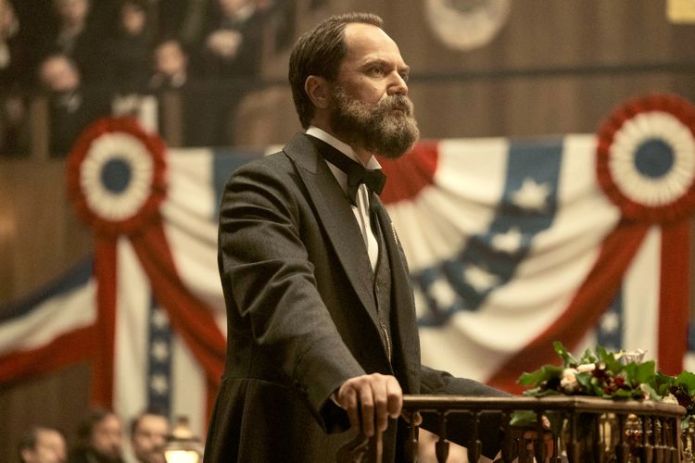
Death by Lighting, the recent hit Netflix show which follows American President James Garfield, begs to differ. Much like Ted Lasso, the show seeks to quietly lead by example and yet makes an even more outrageous claim—that we can be kind, gentle, and in control even when lives and nations are at stake. While the show perhaps simplifies some of the issues of the past to resonate with modern audiences, the character of James Garfield, played by Michael Shannon, is an incredible demonstration of what our modern heroes should look like. The show recognizes that many, if not all, of us have forgotten the vital first step in Teddy Roosevelt’s famous foreign policy approach: “Speak softly and carry a big stick.” So, through Garfield’s desire to keep his promises, to act with gentleness and honor to his children, and to believe the best in everyone around him, we are reminded to walk alongside him in his journey to the White House and to—first and foremost—lower our voices.

James Garfield (Michael Shannon) People Magazine

We would be remiss not to examine, if only briefly, Charles Guiteau, the other side of Garfield’s coin who is presented in parallel to him throughout the series. It is highly likely that, had the show introduced us to this character at the end of the series when his actions finally come to fruition, we would quite simply hate him. After all, his acts result in terrible grief and in lasting ill effects for the United States as a whole. However, that is not how we meet Charles Guiteau, played masterfully by Matthew McFadyen as a striving, impressionable, opportunistic individual with a desperation to show loyalty to someone or something and to receive it in return. Instead, we journey alongside him as we do with Garfield in his setbacks, pain, miscommunications, and in his difficulty with finding even a small corner of the world in which to exist.

James Garfield, as the lead character in the series, has more reason to hate Guiteau than anyone else. And yet it is as if, with one look, Garfield has seen everything that brought Guiteau to such extremity and understood that rage, retribution, and escalation have no place in that conversation. Instead, he continues his policy of kindness and gentleness until the very end, striving to make the happiness in his life resound louder than the tragedy. He shows us that how we react to the cruelty of others will ultimately define us, not them. 

These new characters show that there is now a demand for role models who can make an omelette without breaking eggs—and who can show us how to do the same.

And he pays the price for that decision. In contrast to a “means justify the ends” protagonist who is willing to break everything around them in order to achieve their ends, Garfield shows a Christ-like motivation to be the only one to pay the cost. Rather than allow the hatred and pettiness of what ultimately finishes him to continue beyond his own life, he chooses to end that story and start a new one. One of humility, forgiveness, understanding, and grace. One that values the least of these and has the guts to live that out until the end.

So, what does this new brand of lead character tell us about the desires of the modern audience and about where media might be headed in the future? Well firstly, it shows a deep shift in priorities. It seems that many of us have grown weary of watching characters act on instinct with no concern for the repercussions. Instead, these new characters show that there is now a demand for role models who can make an omelette without breaking eggs—and who can show us how to do the same. This shift will likely work in combination with a new emphasis on understanding people’s experiences, backgrounds, and personal adversities, such as in shows like Ludwig, the BBC series which follows a lead character who struggles to relate to those who are different from him but who eventually strives to be a source of light, kindness, and justice to them anyway.

This trend is a good thing. Perhaps it shows that we, as humans, have decided that Jesus’ emphasis on the softer attributes of forgiveness, gentleness, peace, and patience wasn’t an accident, after all. And that maybe, in order to help us choose that path, we have to choose characters who model it for us, too.

Great Job Sophie Pell & the Team @ Christ and Pop Culture Source link for sharing this story.

McKinsey studied 61 growth companies that outperformed their peers through COVID, inflation, and labor shocks. Here’s what they all had in common | Fortune

McKinsey studied 61 growth companies that outperformed their peers through COVID, inflation, and labor shocks. Here’s what they all had in common | Fortune

Did you know Walmart’s advertising business accounted for about 30% of the company’s operating profit last year? Did you even know that Walmart has an advertising business?

That stunning fact, unknown to many people (including me), exemplifies the conclusion of a new McKinsey study, published today. In the report, Inspired for business growth: How five companies beat the market, researchers at the consulting firm examined how big companies grow both revenue and profits impressively over time—no easy task.

The study identified 61 companies that outperformed their peers from 2019 to 2024, including the investment bank JPMorgan Chase & Co.; the insurance company Progressive; ASML, the Dutch manufacturer of machines for making chips; and Builder FirstSource, a construction products and services company. This was, of course, a tough period that included the COVID pandemic, followed by inflation and a labor shortage. Still, on average, those companies beat the revenue growth of their peers by an impressive five percentage points and beat annual profitability by seven percentage points. The result: a five-point edge in total shareholder returns.

The researchers found three characteristics common to the winners:

They fund business growth through good times and bad. Easy to say, hard to do when money is tight, but these companies gulp hard and do it.

They build a diversified set of growth engines, not relying on just one or two. Not every venture will succeed. But these companies see opportunities to build growth engines outside their primary business, while leveraging existing assets.

They use technology to make it all go faster. Time is money, especially when companies everywhere are using AI to gain advantage by speed.

Those three traits bring us back to Walmart. Its ad business, Walmart Connect, is an internal advertising platform where sellers can promote goods that may be sold online at Walmart Marketplace or in physical stores, powered by the company’s immense trove of data on shopper behavior. It’s an excellent example of how an already huge company can still grow significantly—and profitably—with imaginative use of assets it already has.

Nailing the balance between tending to core business and building out new lines is the key, explained McKinsey senior partner Greg Kelly. “If you don’t grow in your home market, in your core category, you’re highly likely to underperform,” he told Fortune. “So it is necessary. It’s just not sufficient. It was really reinforced to us that it’s got to be those multiple engines that make you much more likely to outperform.”

The shock of the pandemic showed that prudent investment, even in challenging times, is an important factor in achieving growth. “Everybody says they care about growth,” Kelly said. “But it’s tough, especially in a time like COVID, which was so impactful to businesses, to maintain that investment through the cycle. Only a third did.”

This rigor is the principal factor in the successes examined in the study. “What distinguishes business growth leaders is not better foresight, but greater conviction,” the authors conclude—an observation that should be framed on every CEO’s office wall. “They invest when uncertainty is highest, build capabilities rather than chase headlines, and treat growth as something to be engineered rather than hoped for.”

Great Job Geoff Colvin & the Team @ Fortune | FORTUNE for sharing this story.

Secret Link