
Home News Page 3

Property taxes, education, cost of living top of mind for Texas House District 97 candidates

Property taxes, education, cost of living top of mind for Texas House District 97 candidates

Property taxes, education, cost of living top of mind for Texas House District 97 candidates

Three Democrats are running for Texas House District 97 in the March 3 primary election that will decide who faces incumbent John McQueeney in November.

Democrats Beth Llewellyn McLaughlin, Ryan Ray and Diane Symons will face off in the primary. McLaughlin did not respond to the Fort Worth Report’s multiple requests for an interview. 

McQueeney is running uncontested in the Republican Party.

House District 97 encompasses White Settlement, Benbrook, most of Crowley and western and southern portions of Fort Worth. House members are elected for two-year terms.

McQueeney is seeking his second term. In 2024, he replaced U.S. Rep. Craig Goldman, who held the seat since 2013 before running for federal office.

The March primary marks a second attempt for both Ray and Symons to represent the Fort Worth area.

Ray, an Azle native, unsuccessfully challenged Republican Bill Zedler in 2018 in the race for House District 96, now represented by David Cook. 

He said his background in education, property tax and finance — areas he plans to prioritize if elected — will best serve the residents of House District 97. 

Critical of Gov. Greg Abbott’s proposal to eliminate school property taxes, Ray is concerned the plan would have significant and negative impacts on schools, local governments and the housing market.

“I think it would be a great value to the community to provide some expertise and hopefully guide policy in a way that we can provide tax relief that’s fair and doesn’t create more problems,” Ray said.

Ray, who owns a tax firm, holds 16 years working in property tax consulting and served on the Crowley ISD board for 10 years. 

If elected, Ray plans to bring bipartisan solutions to the Texas Capitol.

Like Ray, Symons aims to reform property tax laws. 

A self-employed photographer, Symons was raised in various parts of District 97. She lost her race for Texas House District 97 against Democratic candidate Carlos Walker by a slim margin in a May 2024 runoff.

She proposes specific demographics, such as low-income households and recipients of social security, be exempt from paying property taxes to create more affordable living.

She wants to prioritize funding higher education opportunities for students and increase minimum wage.

Critical of private school vouchers, Symons believes lawmakers need to introduce legislation “that gives everybody a fair chance.”

“I want to make sure that when I’m faced with a vote, that y’all get a poll because I want to see what y’all want and not what I want,” Symons said. “That’s really important, that people really let the people decide.”

While McQueeney is not set to run against a Democrat until November he is already thinking about the work he hopes to see in the 2027 legislative session. 

The legislator — a business owner and fast food franchisee — considers eliminating school property taxes realistic but eliminating property taxes as a whole unsustainable. 

“You can’t eliminate property taxes without a means to provide,” McQueeney said. “My office will be doing everything we can to lead on that.”

He wants Texas to become the most economically competitive state by not overregulating business and investing in workforce. Industries such as data centers have been at the center of conversations between local and state officials regarding the state’s growth, economy and power demands.

Infrastructure is one of the biggest focuses for the Texas Committee on State Affairs, said McQueeney, who makes up one of its 15 members. 

The public can expect lawmakers to continue identifying a balance between economic growth and responsibly managing the state’s power grid, McQueeney said.

“I don’t think there’s anybody better equipped in this district than myself to go down and continue to fight for that balance of pro-business policies as well as infrastructure investment and having an understanding of what that actually means,” McQueeney added.

Aside from running his own business and franchises, McQueeney is a local business leader and remains closely tied to his alma mater, Texas Christian University, through board and committees.

Ahead of the November election, McQueeney reflected on the successes that came out of the 2025 legislative session, including investments in public education. 

“It was important to me … to leadership that we were able to deliver on all fronts there. As we go into this (next) session, we’re going to need to make sure that we continue to double down on that,” he said.

Early voting for the primary election runs until Feb. 27. Election Day is March 3.

Nicole Lopez is the environment reporter for the Fort Worth Report. Contact her at nicole.lopez@fortworthreport.org

At the Fort Worth Report, news decisions are made independently of our board members and financial supporters. Read more about our editorial independence policy here.

Great Job Nicole Lopez & the Team @ Fort Worth Report for sharing this story.

Mexican Drug Lord’s Killing Sparks Widespread Violence

Mexican Drug Lord’s Killing Sparks Widespread Violence

Welcome back to World Brief, where we’re looking at the deadly fallout of a Mexican cartel leader’s killing, upcoming U.S.-Iran nuclear talks, and International Criminal Court pretrial hearings for former Philippine President Rodrigo Duterte.


Retaliatory Attacks

Mexican authorities are rushing to restore order after the killing of a notorious cartel leader by the country’s special forces on Sunday sparked one of the most widespread eruptions of violence in the nation’s recent history. At least 62 people have been killed thus far—including 25 members of Mexico’s National Guard—as cartel members block roads and set fire to vehicles in retaliation for the death of Nemesio Oseguera Cervantes, the leader of the Jalisco New Generation Cartel (CJNG).

Welcome back to World Brief, where we’re looking at the deadly fallout of a Mexican cartel leader’s killing, upcoming U.S.-Iran nuclear talks, and International Criminal Court pretrial hearings for former Philippine President Rodrigo Duterte.


Retaliatory Attacks

Mexican authorities are rushing to restore order after the killing of a notorious cartel leader by the country’s special forces on Sunday sparked one of the most widespread eruptions of violence in the nation’s recent history. At least 62 people have been killed thus far—including 25 members of Mexico’s National Guard—as cartel members block roads and set fire to vehicles in retaliation for the death of Nemesio Oseguera Cervantes, the leader of the Jalisco New Generation Cartel (CJNG).

CJNG is considered one of the fastest-growing criminal networks in Mexico. A breakaway gang of the country’s powerful Sinaloa cartel, it is known for trafficking fentanyl, cocaine, and other illicit narcotics into the United States and for carrying out brazen attacks against Mexican officials. In December 2024, the U.S. State Department offered a reward of up to $15 million for information that could aid in the arrest of Oseguera Cervantes, and in February 2025, the Trump administration designated the cartel as a foreign terrorist organization.

Early Sunday morning, Mexican special forces tracked down Oseguera Cervantes (known as “El Mencho”) at his hideout in the town of Tapalpa. According to Mexican Defense Secretary Ricardo Trevilla Trejo, Oseguera Cervantes was severely injured during the attempt to capture him and ultimately died from his injuries while en route to Mexico City. His death marks the highest-profile blow against cartels since the recapture of former Sinaloa boss Joaquín “El Chapo” Guzmán in 2016.

Mexican President Claudia Sheinbaum has been under mounting pressure from the White House to tackle the country’s vast cartel network. “Mexico must step up their effort on Cartels and Drugs!” U.S. President Donald Trump wrote on Truth Social on Monday. He has previously imposed tariffs and threatened military intervention if Mexico City fails to adequately counter fentanyl trafficking across the two countries’ shared border. Trejo confirmed on Monday that the United States provided intelligence support for Sunday’s operation against Oseguera Cervantes.

On Monday, White House press secretary Karoline Leavitt wrote that Trump’s objectives have always been very clear. “[T]he United States will ensure narcoterrorists sending deadly drugs to our homeland are forced to face the wrath of justice they have long deserved,” she posted on X.

But while she added that the Trump administration “commends and thanks” Mexico’s military for its operation, local authorities are still scrambling to quell the fallout. Several Mexican states canceled school on Monday as local governments warned residents to stay inside. More than 1,000 people were trapped overnight at the Guadalajara Zoo due to the violence. And the U.S. Embassy in Mexico City warned personnel in eight cities and the state of Michoacán to shelter in place, telling U.S. citizens in many parts of the country to do the same.

“[W]e must remain informed and calm,” Sheinbaum posted on Sunday. “We work every day for peace, security, justice, and the well-being of Mexico.”


Today’s Most Read


The World This Week

Tuesday, Feb. 24: The Russia-Ukraine war marks its four-year anniversary.

The United States halts collection of tariffs imposed under the International Emergency Economic Powers Act.

The Caribbean Community begins a four-day leaders’ summit in Saint Kitts and Nevis.

European Union foreign-policy chief Kaja Kallas hosts Board of Peace chief Nickolay Mladenov.

Wednesday, Feb. 25: The United States and Mauritius conclude three days of discussions concerning control of the Chagos Islands.

Indian Prime Minister Narendra Modi begins a two-day trip to Israel.

German Chancellor Friedrich Merz begins a two-day trip to China.


What We’re Following

Upcoming nuclear talks. U.S. and Iranian officials are set to hold another round of nuclear talks in Geneva on Thursday. But as anti-regime protests reemerge across Iran and Trump doubles down on his threat of military intervention if no progress is made in the nuclear negotiations, it remains unclear whether the two nations will strike a deal—or go to war.

A senior Iranian official told Reuters on Sunday that Tehran is prepared to make concessions on its nuclear program, including to potentially send half of its most highly enriched uranium abroad, if the United States agreed to two things: the lifting of U.S. sanctions and recognizing Iran’s right to enrich uranium. The White House has not commented on this proposal, but oil prices eased on Monday following the news while still remaining at a six-month high in the face of possible U.S. military action.

At the same time, the Financial Times reported on Sunday that Iran agreed to a nearly $590 million deal with Russia in December to purchase thousands of advanced shoulder-fired missiles. Such an agreement marks Tehran’s most significant effort to rebuild its air defenses since its 12-day war with Israel last June, and experts warn that it could threaten future nuclear talks with the United States.

Crimes against humanity. The International Criminal Court (ICC) kicked off five days of pretrial hearings on Monday for former Philippine President Rodrigo Duterte, who faces three counts of crimes against humanity for overseeing a deadly anti-drug crackdown. Prosecutors have accused Duterte of ordering police and death squads to carry out dozens of extrajudicial killings, using financial rewards or threats of retaliation as motivation.

It is unclear how many people were killed during Duterte’s brutal “war on drugs,” which officially began in June 2016. Rights activists place estimates as high as 30,000 deaths, though they have also accused current President Ferdinand Marcos Jr. of continuing the killings.

Duterte has repeatedly denied the charges. The former president “stands behind his legacy resolutely, and he maintains his innocence absolutely,” lead defense lawyer Nick Kaufman told the three-judge ICC panel on Monday. Duterte, 80, has refused to attend the hearings, saying he is “old, tired, and frail,” though judges ruled last month that he is fit to stand trial. He is in custody at The Hague.

The ICC panel now has 60 days to determine whether the prosecution’s evidence is strong enough to warrant putting Duterte on trial.

New tax guidelines. India revised its 33-year-old tax treaty with France on Monday, scrapping the so-called most favored nation clause. Under that provision, if New Delhi were to offer better tax terms to another country, then France would automatically receive the same benefit. Now, though, Paris will only receive the benefits directly written in its contract with New Delhi—providing clarity aimed at resolving the two nations’ long-running tax disputes.

According to the Indian Finance Ministry, the updated treaty provides new dividend tax rates aimed at helping French companies save millions of dollars, and it expands India’s ability to tax specific transactions. The deal also improves guidelines for sharing and collecting tax information between the two countries and adds new rules intended to prevent tax avoidance.

Both nations have recently sought to expand their bilateral cooperation. Just last week, French President Emmanuel Macron and Indian Prime Minister Narendra Modi upgraded their countries’ defense ties with a new deal that includes plans to jointly produce Rafale fighter jets and other military aircraft.


Odds and Ends

The final hockey game of the 2026 Olympics may not have had the spice of Heated Rivalry, but it sure had the drama. The U.S. men’s team took home the gold on Sunday in a 2-1 win over Canada, its first gold medal since its 1980 “Miracle on Ice” moment. Center Jack Hughes scored the winning goal in overtime, and his toothless smile drew thunderous applause from fans. But not everyone was thrilled. Shortly after the U.S. victory, an eBay user put an autographed rookie trading card of Hughes up for sale for more than $730,000 with the description: “I hate you, Jack Hughes. You ruined my day. Go Canada !!!!”

Great Job Alexandra Sharp & the Team @ World Brief – Foreign Policy for sharing this story.

Four Crafty Hobbies to Try Instead of Doomscrolling – Our Culture

Four Crafty Hobbies to Try Instead of Doomscrolling – Our Culture

It’s been a long, screenful day. All you’re craving is a way to unwind – and almost automatically, your hand reaches for that social media app you know, deep down, you’d be better off without.

Pause right there. What we’re often actually seeking in those moments is nervous system regulation, a way to relax and get out of our heads and into our bodies. A 2024 study published in Frontiers in Public Health found that people who regularly engage in arts and crafts report higher levels of happiness, life satisfaction and a greater sense that life is worthwhile. Here are four to try the next time the urge to doomscroll hits.


Bead flowers

Bead flowers are quietly satisfying and therapeutic, and they can seriously upgrade your living space. Bonus points for the concept of a forever bouquet. The most popular method is French beading, a practice involving stringing beads onto wire and shaping them into petals and leaves. Follow a YouTube tutorial or a guide book to get started.

Paint by numbers

No time or creative energy to paint from scratch, or simply craving more structure? Painting by numbers is a great way to improve cognitive function and foster a sense of accomplishment, while the repetitive, mindful nature of the activity does wonders for relaxation.

Craft a greeting card

A card is too often a last-minute consideration. Why not make a few in advance and build your own stash to choose from? You can buy DIY card sets or cut your own from thicker paper for a more hands-on experience, then draw, paint or collage to your heart’s content. Your loved ones are bound to appreciate the personal touch.

Make a zine

If other activities on this list offer structure, a zine is the opposite, offering the chance to go completely off-script. Fashion collages, personal storytelling, advocating for a cause or simply celebrating your friends… The subject matter is entirely up to you. So is the aesthetic! All you need to get started is some paper and scissors.

Great Job Gerda Krivaite & the Team @ Our Culture Source link for sharing this story.

Stablecoins could finally bring cross-border payments into the digital age, argues XTransfer CEO Bill Deng | Fortune

Stablecoins could finally bring cross-border payments into the digital age, argues XTransfer CEO Bill Deng | Fortune

Bill Deng, CEO of China-based fintech platform XTransfer, thinks stablecoins can help finally digitize business-to-business transactions, often still stuck in a world of PDFs and emails. 

Much of cross-border trade now operates around the clock. Ports, airports, and fulfillment centers work at all hours of the day.

But “when it comes to money, there’s no 24/7 infrastructure,” Deng complained during an interview with Fortune on the sidelines of the Forum Ekonomi Malaysia in Kuala Lumpur in early February. Business-to-consumer and peer-to-peer financial transactions–even across borders–can now be done in minutes. Yet, in the business world, “they negotiate deals via pro forma invoices, and they still exchange information via email,” he says. 

Stablecoins–digital tokens tied to a fiat currency like the U.S. dollar—can make payments “more transparent, faster, and with a much lower cost,” Deng argued.  “For domestic payments, stablecoins do not add that much value. But for cross‑border transactions, they can be extremely valuable.”

Several governments, including the U.S., Japan, and the Chinese city of Hong Kong, have set up regulatory frameworks for stablecoins. The total market value of all stablecoins is now $300 billion, up by 75% year-on-year. But there’s still a long way to go before stablecoins start to play a role in cross-border payments: A McKinsey estimate put annual stablecoin payments at only $390 billion, or just 0.02% of the total.

Small- and medium-sized enterprises throughout the developing world often turn to unregulated “shadow banking” systems to get money across borders. For example, there’s “hawala,” a centuries-old form of money transfer that predates the formal international banking system. In a typical hawala transaction, a customer pays cash to a broker in one country, and a corresponding broker in the destination country pays out the equivalent to the intended recipient. Hawala is often faster than traditional banking, and extends to areas underserved by traditional financial infrastructure. “It’s become the mainstream for SMEs in many developing countries,” Deng explained. 

Yet due to its use by criminal networks, governments have scrutinized hawala and other shadow finance systems for money-laundering. Because hawala operates outside the formal banking system, its funds sometimes mingle with proceeds from fraud or other crimes. When banks detect these tainted flows, they freeze accounts.

“Banks are reluctant to provide services to SMEs, which forces enterprises to use hawala, and as a result, banks are even less willing to serve them,” Deng says. 

XTransfer is already helping companies navigate a global tangle of anti-money-laundering regulation; Deng claimed AI helps his company do compliance more accurately than traditional banks at just 5% of the cost. 

He also noted that stablecoins might help governments trying to keep an eye on illicit financial flows. Stablecoin transactions can hold data about the sender, receiver, and the purpose of a payment, making it easier for regulators to act quickly if something looks suspicious. “If there is some criminal evidence to show that the money needs to be frozen, issuers can freeze it within one second,” he explained. 

Deng and five other co-founders established XTransfer in 2017 as a B2B version of Alipay, the ubiquitous Chinese payments service. Deng had spent over a decade in the payments sector, first at Visa, then at Alibaba affiliate Ant Financial. After several of his colleagues left to start their own businesses, including ride-hailing firm Didi, Deng decided to make the jump to become a startup founder too. 

XTransfer serves over 800,000 enterprises, almost half of which are outside of China; The firm now processes over $12 billion in payments each month, and over 2% of China’s exports. In late 2025, the firm signed strategic partnerships with Malaysia’s Maybank, Thailand’s Kasikornbank, and Taiwan’s Bank SinoPac. 

Still, XTransfer is getting a front-row seat to shifting trade flows, sparked by U.S. President Donald Trump’s decision to slap a wide array of tariffs on U.S. imports. (On Feb. 22, the U.S. Supreme Court deemed many of these tariffs to be illegal; Trump has vowed to maintain tariffs anyway). 

Deng says the U.S. share of payments flowing through XTransfer’s platform has dropped from 22% a few years ago to just 9% today. In contrast, flows from “Global South” countries now account for 70% of the total. 

XTransfer’s business in Asia, Africa, and Latin America grew 106% in 2025, with Africa surging more than 270%, according to a January press statement. 

In the long run, Deng sees trade as shifting away from individual manufacturing powerhouses like China, with supply chains becoming more like a network connecting different smaller economies. And he argues Chinese business can help play a role in fostering the growth of manufacturing sectors elsewhere.

“The first thing locals think about Chinese people is that they’re wealthy,” he says, with a laugh. “Many Chinese people are bringing business into these countries–just like how the U.S. and Britain brought business into China 40 years ago.”

Great Job Nicholas Gordon & the Team @ Fortune | FORTUNE for sharing this story.

The 2026 Whitney Art Party Is Still On Our Mind: RECAP

The 2026 Whitney Art Party Is Still On Our Mind: RECAP

Jason Lowrie/BFA.com

It’s been nearly a month since the 2026 Whitney Art Party gave New York City its first big night out following the annual NYE ball drop, and we still can’t forget how much fun it all was just to be taking in museum culture during after hours!

RELATED: Bélizaire And Beyond! 10 Historic Black Artworks Worth Knowing About

While many New Yorkers are currently feeling the blunt force of the second snowstorm and first official blizzard in years, the Whitney Art Party this year came on the helms of Winter Storm Fern that impacted the city for four days before easing up just in enough time to party. We were some of the lucky patrons who put on our dancing shoes (read: snow boots!) to check out a night where music, art, philanthropy and some of the flyest fashion folk all came together in one cold-yet-colorful collision.

Operating on a slightly strict dress code of “loudest prints and most vibrant patterns,” attendees did just that in a vibrant mix of styles that saw streetwear, chic and cocktail hour equally making for acceptable attire. The event itself acts as a charity fundraiser of sorts, with a prestigious team of creatives known as the Whitney Contemporaries who arranged proceeds through ticket sales and donations that will directly benefit the museum’s mission to give emerging artists a platform.

A brief overview on the ‘why’ in general for the Whitney Art Party below, per the press release:

“The sold – out event invited young patrons, emerging artists, and guests from the worlds of art, fashion, business, philanthropy, and entertainment for an unforgettable evening of dancing, music, and art. Co – chairs Ego Nwodim, Steven Beltrani, Micaela Erlanger, Martine Gutierrez, Alexander Hankin, and Emma Safir enthusiastically greeted guests and partygoers were entertained with DJ sets by The Dare and Raúl de Nieves.”

A Wizard Studios-designed backdrop for photo ops, complimentary goodies from the likes of Aesop, Faena New York, Libertine and a thirst-quenching open bar all night long courtesy of Maestro Dobel® Tequila all came with the invite. In addition to pleasantries mixed with the combo of The Dare and Raúl de Nieves each delivering body-rocking DJ sets on the Museum’s ground floor in the Kenneth C. Griffin Hall, attendees were also free to explore the art pieces on various other levels — a full elevator bartender poured libations from floor-to-floor! Those interested in heading to floor 7 for a look at the “Untitled” (America) exhibition on display since July 2025 were more than welcome; others took a straight shot ride to the top for an up-close look at the revered High Wire: Calder’s Circus at 100 exhibition.

In short, there was no wrong way to turn for the entire duration of the night.

Notable faces in attendance included newly-appointed First Lady Of New York, Rama Duwaji, in addition to home living queen Martha Stewart, former SNL cast member Ego Nwodim operating as co-chair, Pose actor Ryan Jamaal Swain, hip-hop socialite Ava Dash, rising model Sarah Daoui, notable art curator Souleo with the look of the night and a who’s-who of the Big Apple elite.

Just to name a few.

Keep scrolling to check out the 2026 Whitney Art Party from our point of view – hope to see you next year:

The 2026 Whitney Art Party Is Still On Our Mind: RECAP
Jason Lowrie/BFA.com

Great Job Keenan Higgins & the Team @ Black America Web for sharing this story.

O’Connor, San Marcos, Stevens athletes on overcoming injuries, bringing flair to All-Star Game

O’Connor, San Marcos, Stevens athletes on overcoming injuries, bringing flair to All-Star Game

SAN ANTONIO – The 2026 San Antonio Sports All-Star Basketball Game is set to showcase 134 of the top high school talent in the Class of 2026 from the greater San Antonio area.

The Alamo City’s All-Star game will feature four games, a 3-point contest and a skills challenge.

Media Day was on Sunday, Feb. 1, and the KSAT 12 Sports team was there to interview the players and head coaches.

Monday’s featured players will play on Team White from O’Connor, Stevens and San Marcos high schools:

• Melayna Perkins, Guard, San Marcos High School

• Azariah Fennell, Guard, San Marcos High School

• Simone Pryor, Guard, O’Connor High School

• Ethan Bilyeu, Forward, O’Connor High School

• Hagen Hurst, Post, O’Connor High School

• Richard Guerra, Guard, Stevens High School

The San Antonio Sports All-Star Basketball Game is scheduled for Sunday, April 12, at Northside Sports Gym.

Read more reporting and watch highlights and full games on the Big Game Coverage page.

Copyright 2026 by KSAT – All rights reserved.

Great Job Mary Rominger, Adam B. Higgins & the Team @ KSAT San Antonio for sharing this story.

Indivisible Comal County – May Public Meeting

Indivisible Comal County – May Public Meeting

Hello Indivisibles!!!

This is our monthly public meeting, and everyone is welcome. If you’ve been watching from the sidelines, curious about what we do, or looking for a way to get involved locally, this is the moment to come through.

We’ll walk through who we are, what we stand for, and the work ahead of us here in Comal County. You’ll get updates on ongoing projects, volunteer opportunities, youth organizing and the issues shaping our community — and you’ll meet people who care about building something better right here at home.

Date: Monthly on the first Monday

Time: 6:00 PM – 7:00 PM

Location: McKenna Center

Address: 801 W San Antonio St, New Braunfels, TX 78130

Show up, get connected, and help shape the future of our county.

Indivisible Comal County – Public Meeting

Indivisible Comal County – Public Meeting

Hello Indivisibles!!!

This is our monthly public meeting, and everyone is welcome. If you’ve been watching from the sidelines, curious about what we do, or looking for a way to get involved locally, this is the moment to come through.

We’ll walk through who we are, what we stand for, and the work ahead of us here in Comal County. You’ll get updates on ongoing projects, volunteer opportunities, youth organizing and the issues shaping our community — and you’ll meet people who care about building something better right here at home.

Date: Monthly on the first Monday

Time: 6:00 PM – 7:00 PM

Location: McKenna Center

Address: 801 W San Antonio St, New Braunfels, TX 78130

Show up, get connected, and help shape the future of our county.

Federal prisons bar gender-affirming care for trans people

Federal prisons bar gender-affirming care for trans people

This article was originally published by The Marshall Project, a nonprofit news organization covering the U.S. criminal justice system. Sign up for their newsletters, and follow them on InstagramTikTokReddit and Facebook.

The federal prison system will stop providing gender-affirming medical or social transition care to almost any transgender people, under a new policy released by the Bureau of Prisons Thursday.

Gender identity, the policy states, is “disconnected from biological reality and sex” and “does not provide a meaningful basis for identification.” The move upends nine years of federal policy and will affect more than 1,000 people diagnosed with gender dysphoria in prisons across the country, who had longstanding access to basic gender-affirming care.

The new policy states that trans people will not have access to surgery, clothing or toiletry items that align with their gender identity. People behind bars on hormone medications will be forced to taper off them. Instead, the primary treatments will be therapy and psychiatric medications like antidepressants.

The policy, which was signed on Thursday and filed in federal court at a hearing in Washington, D.C., uses the phrase “sex trait modification surgery” to describe procedures that earlier iterations of the manual called “gender-affirming surgeries.” “The Bureau will not provide sex trait modification surgeries to address” gender dysphoria, it says.

The changes are in keeping with an executive order President Donald Trump signed last year, almost immediately after taking office, called “​​Defending women from gender ideology extremism and restoring biological truth to the federal government.” That order said the federal prison system “shall ensure that no Federal funds are expended for any medical procedure, treatment, or drug for the purpose of conforming an inmate’s appearance to that of the opposite sex.”

As part of a lawsuit challenging Trump’s executive order, a federal judge had ordered the prison system to continue providing hormones and social accommodations. However, in court papers and interviews with The Marshall Project, transgender people have described their access to hormone treatments and social transition supports as inconsistent.

Attorneys representing transgender people in that suit said they will continue to press for their clients to receive the care they need. “It’s clear that this new policy is a ban on gender affirming healthcare,” said Shana Knizhnik, an attorney with the ACLU. “This is a policy that disregards the medical needs of our plaintiffs.”

The Bureau of Prisons did not immediately respond to a request for comment on the new policy.

For the last nine years — including during Trump’s first administration — the federal prison system operated under a policy that allowed transgender people to be offered hormones, surgery, and placement in prisons that matched a person’s gender identity — although the latter two rarely happened in practice. Alix McLearen authored earlier versions of the Bureau of Prisons’ transgender policy manuals as a senior official at the agency before her retirement in 2024. “Denying hormones to people in distress and withdrawing them from people who are stable undermines safe facility operations,” she said. “From a corrections management perspective, this is not just cruel, but reckless.”

The new policy is the latest move amid a culture war targeting transgender civil rights nationwide, with hundreds of anti-trans bills passed in state legislatures over the last several years. These efforts culminated last year with the Supreme Court upholding gender-affirming care bans for young people, which have passed in some 20 states. Jared Littman, an attorney for the government, cited that decision in Thursday’s hearing, arguing that the Supreme Court “made it pretty clear” that a ban with “any conceivable rational basis” must be allowed. Amid this push, prison systems in Georgia, Kentucky, Utah and Florida have banned access to gender-affirming care.

People incarcerated in Georgia are suing state officials over their policy, which is very similar to the new federal one. “If they implement that plan and it’s not enjoined, people will die,” said Chinyere Ezie, an attorney representing the plaintiffs in the Georgia suit, of the new federal prison policy. “People will die by suicide. People will die or be severely hurt from castration attempts. People who do not lose their lives will experience the very extreme physiological symptoms of hormone therapy withdrawal in addition to psychological symptoms, including depression, anxiety, and suicidal ideation.”

Stopping hormone therapy can lead to hot flashes, mood swings and insomnia, and may affect bone density, leaving people vulnerable to breaks and fractures. More than 600 people with gender dysphoria were getting gender-affirming hormones in federal prison, according to court documents filed last year.

C.C. Hunter, who is incarcerated in a men’s facility in Butner, North Carolina, was diagnosed with gender dysphoria and prescribed gender-affirming hormones by federal prison doctors and psychologists. If they were discontinued, “I would think and feel like the world was ended,” she said. “Like my life doesn’t really matter to these people.”

The changes come on the heels of a memo the Trump administration issued in December to auditors who inspect federal prisons, telling them to ignore provisions of a federal law called the Prison Rape Elimination Act that were designed to keep transgender people safe from sexual assault. Those provisions conflict with Trump’s executive order, the memo said. Transgender people are at greatly increased risk of sexual assault while they’re incarcerated compared to cisgender people.

The Prison Rape Elimination Act requires that officials deciding where to house transgender people give “serious consideration” to the “inmate’s own views with respect to his or her own safety.” Even under that policy, across both Democratic and Republican administrations, gender-affirming housing was rare, and surgery rarer still. By the end of the Biden administration, fewer than two dozen trans people were housed according to their gender identity. Two people had received gender-affirming surgery, only after their lawsuits led to a settlement or a judge’s order.

But hormones and social accommodations were readily available after medical and psychological evaluation. Special clothing and commissary items were also available, like bras for transgender women or chest binders for transgender men.

That began to change last year after Trump’s executive order led to a chaotic response in federal prisons, when transgender people had clothing and medications confiscated, only to be redistributed again, while wardens awaited guidance from Washington.

The new policy says no one newly diagnosed with gender dysphoria can have access to hormones, and anyone currently on hormones must taper off. Those who have already had surgery and those who have been on hormones “for an extended period of time and develop severe…withdrawal effects from tapering” may have their tapering plan “adjusted as necessary.” But the policy does not outline any scenario where a transgender person can stay on hormones indefinitely, as has long been the practice.

Courts have held that prisons issuing a blanket ban on any kind of medical care is a violation of the Constitution. In dozens of cases, judges have said prisons are required to provide gender-affirming hormones as needed. Denying the treatment, without an individualized assessment of each patient’s needs, can be cruel and unusual punishment, they found.

The new federal prison policy says that each person with gender dysphoria will get an “individualized treatment plan,” but there is a categorical ban on surgeries and new hormone prescriptions.

Experts caution that for many people, therapy alone is not adequate. Dan Karasic, a psychiatrist at the University of California, San Francisco, helped develop international standards for the treatment of transgender people and is an expert witness for prisoners in the ongoing lawsuit challenging the Bureau of Prisons’ implementation of Trump’s executive order. “For those people for whom hormones and surgery are indicated, psychotherapy is not a substitute. Psychotherapy does not make gender dysphoria go away. You are substituting an intervention that’s been demonstrated to be effective with one that has not,” Karasic said.

Some of the language in the new policy is nearly identical to a 2024 Florida policy that experts likened to “conversion therapy,” a discredited practice that claims to cure homosexuality. Under Florida’s policy, the state’s prisons eliminated access to women’s clothing and undergarments, stopped providing accommodations that allowed trans women to grow their hair long, and greatly restricted access to gender-affirming hormones.

“First, they made her cut her hair, then they took her bra away,” said LaTrisha Ramon, whose daughter Sauge Smith was incarcerated in Florida. Smith had well-developed breasts after years on hormones, and the prison uniform was a thin white t-shirt, which left her feeling exposed and unsafe. “Imagine walking around a men’s prison without a bra.”

Smith died by suicide in a Florida prison last year. Friends and family blame the prisons for suddenly stopping her gender-affirming care.

The Florida Department of Corrections has not responded to emails and a records request regarding Smith’s death. In an email to The Marshall Project, Smith’s partner, Ralph Miller, asked, “How many situations like Sauge is needed before it’s acknowledged that this is seriously not a game?”

Great Job Megan Kearney & the Team @ The 19th Source link for sharing this story.

Green steelmaker Boston Metal to cut jobs following equipment failure

Green steelmaker Boston Metal to cut jobs following equipment failure

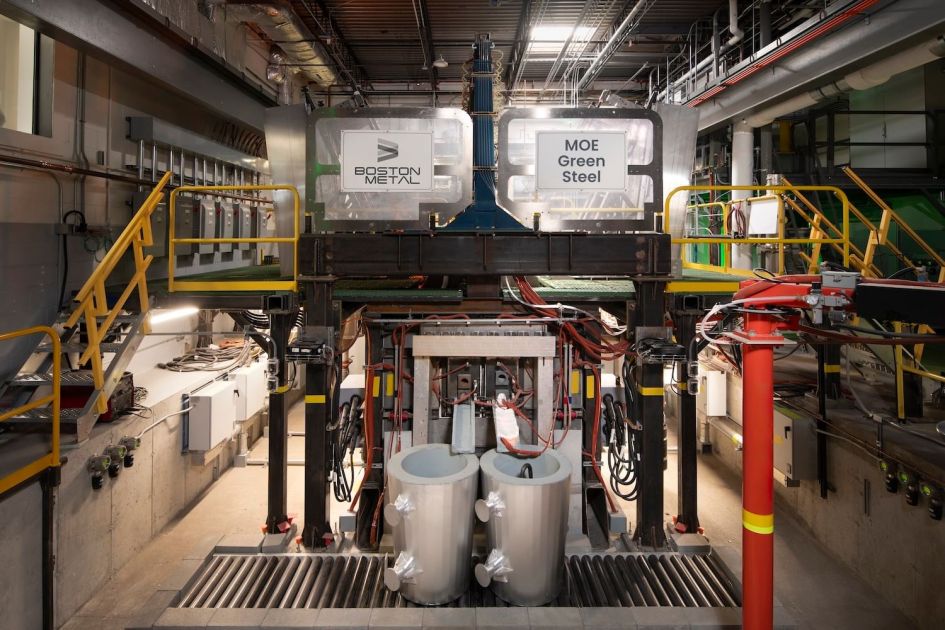
Last March, Boston Metal said it had moved one step closer to commercializing its technology after successfully producing steel from its industrial-size system in the Boston suburb of Woburn. The accomplishment de-risks our technology and validates scalability to achieve commercial production,” the company said in a press release.

Yet as Boston Metal works to refine its green-steel system, it has also been pursuing projects in Brazil that it hopes could become a reliable source of revenue in the nearer term.

Boston Metal’s same molten oxide electrolysis process can be used to extract high-value metals such as niobium, chromium, and manganese from mine-waste tailings. That could reduce the need for other companies to pull those materials directly from the earth.

Adam Rauwerdink, Boston Metal’s senior vice president of business development, told Canary Media last June that the company was initially focusing on extracting and selling niobium — a valuable alloying element used in steel production — to start bringing in money. At the time, niobium sold for about $82 per kilogram (about $74,000 per ton), while steel went for roughly $900 per ton.

Prior to last month’s accident, Boston Metal said it had already restructured its business to concentrate on advancing its operations in critical metals. There is strong near-term demand for critical metals, while the cost and complexity of developing molten oxide electrolysis [for steel] have outpaced what our current revenue and available capital can support,” the company said in this week’s statement.

Boston Metal’s Brazilian subsidiary, Boston Metal do Brasil, built and began operating a pilot facility in the state of Minas Gerais in 2023. Last year, it completed construction on an industrial critical-metals plant, and the subsidiary was set to start generating revenue with industrial-scale production” this year, according to a company fact sheet.

Though Boston Metal says it will press ahead with its high-value metals strategy, it’s unclear how the industrial accident in Brazil will affect that production timeline or impact Boston Metal’s broader expansion plans in the United States. The announcement of layoffs in Massachusetts comes shortly after the office of Democratic Gov. Maura Healey awarded Boston Metal over $950,000 in capital grants to upgrade its Woburn operations — public backing that was reportedly expected to lead to local job growth.

In the coming months, our priority will be restoring operations in Brazil and scaling the critical metals business in Brazil, the U.S., and internationally,” the company said.

{
if ($event.target.classList.contains(‘hs-richtext’)) {
if ($event.target.textContent === ‘+ more options’) {
$event.target.remove();
open = true;
}
}
}”
>

Great Job Maria Gallucci & the Team @ Canary Media for sharing this story.

Secret Link