

The political dam that has protected President Donald Trump from the Epstein scandal for years may finally be starting to crack — and Attorney General Pam Bondi now finds herself standing directly in the flood zone.
For months, Bondi has been accused by critics of deploying every maneuver possible to shield Trump from the fallout — slow-walking document releases, defending sweeping redactions and, more recently, facing questions about whether records tied to the Epstein investigation quietly disappeared from public view. Now that simmering controversy is colliding with something far more dangerous: a growing rebellion inside Trump’s own party.
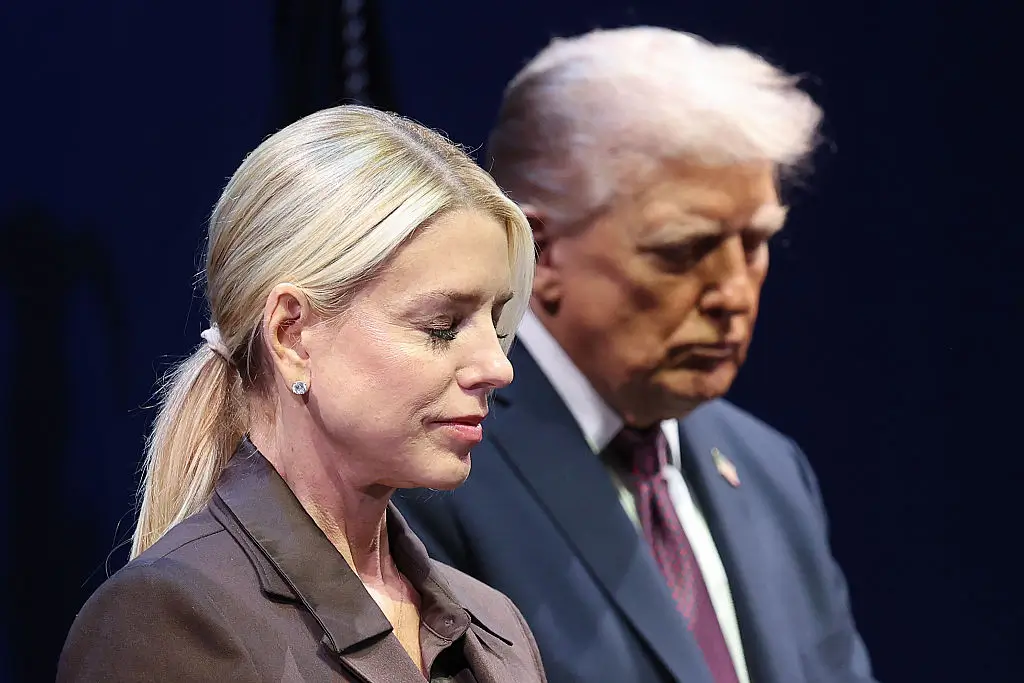
That pressure burst into the open Wednesday when the House Oversight Committee voted to subpoena Bondi and compel her testimony about the Justice Department’s handling of the Epstein files after several Republicans broke ranks and sided with Democrats to force the move forward.
The vote — 24 to 19 — landed despite a last-minute effort from committee chairman Rep. James Comer, R-Ky., to block the subpoena and shield the attorney general from direct questioning.
Five Republicans ultimately joined Democrats to demand Bondi testify under oath: Reps. Nancy Mace of South Carolina, Lauren Boebert of Colorado, Tim Burchett of Tennessee, Michael Cloud of Texas and Scott Perry of Pennsylvania.
For a Congress that has largely marched in lockstep behind Trump since his return to power, the moment represented something far more dangerous than another routine oversight fight. It signaled that Trump’s own party may be losing patience with the administration’s handling of the Epstein scandal and that Bondi’s effort to keep the fallout contained is beginning to fray.
Before the vote, Comer made a final push to stop the subpoena. The Kentucky Republican told colleagues that Bondi’s chief of staff had assured him the attorney general would privately brief lawmakers about the Epstein investigation, arguing that a subpoena was unnecessary.
As the vote began to tilt toward approval, Comer made one last appeal to the committee, reminding members that the attorney general had offered to “come in and give briefings.” The warning fell flat.
Under committee rules, Comer must now issue the subpoena requiring Bondi to appear for a closed-door deposition under oath — a setting where officials cannot rely on the political theater of televised hearings or carefully rehearsed talking points.
The vote itself instantly ignited fierce reactions online, where critics framed the moment as long overdue accountability.
“Straight to jail. Put her in one of the ICE concentration camps,” one commenter wrote on Threads.
Others dismissed the development as political theater unless it leads to real consequences.
“Subpoena her to hear what?? More of her Burn Book?? They need to cut the crap and stop with the optics. They’re not getting anywhere with her, and they know it,” another post read. “Prosecute her for lying under oath, demand the REST of the files, and bring in the currently FREE, ALIVE AND WELL men named by the victims!!!”
Another reaction captured the skepticism surrounding Washington investigations.
“Theater. So sick of it. Call us when there are CONSEQUENCES,” one user wrote.
Others argued lawmakers should take a harder line when Bondi testifies.
“And cut her mic off if she won’t answer questions. Wtf, people, it’s 2026. We have the power to do this.”
Another commenter declared more bluntly: “BREAKING: The dam is breaking for Trump in Washington.”
The pressure surrounding Bondi has been building for months, fueled by growing anger on Capitol Hill over the Justice Department’s handling of Epstein-related evidence and document releases.
The department has released millions of pages tied to the Epstein investigation in waves, but instead of calming the controversy, the disclosures have repeatedly fueled new questions. Lawmakers from both parties have accused Bondi and Deputy Attorney General Todd Blanche of slow-walking the process or withholding material despite legislation requiring transparency around the files.
The Justice Department also faced outrage earlier this year after inadvertently publishing dozens of unredacted nude images and identifying details connected to victims — a mistake lawyers for survivors described as “life threatening.”
But perhaps the most troubling revelation involves records that quietly vanished from public view.
One of those documents — a Justice Department spreadsheet cataloging evidence shared with prosecutors and defense lawyers in the Epstein case — now returns a simple “page not found” when accessed online.
Archived versions of the file tell a far more complicated story.
Buried in the records was a reference to at least four FBI interviews conducted in 2019 with a woman who accused Trump of violently assaulting her when she was between 13 and 15 years old.
According to reports, a 21-page slideshow included allegations that sometime between 1983 and 1985 Trump forced the girl to perform oral sex. When she bit down on his exposed penis, he allegedly punched her in the head and kicked her out. The woman later told investigators that Epstein introduced her to Trump in 1984.
Those interviews were referenced in internal Epstein case materials but later disappeared from the publicly accessible Justice Department database.
Independent journalist Roger Sollenberger reported that FBI agents deemed the woman a “credible accuser,” though legal experts note that the designation does not mean the allegations were verified.
What the records do show is sustained investigative interest.
Justice Department materials indicate the FBI interviewed the woman at least four times in 2019 — on July 24, Aug. 7, Aug. 20 and Oct. 16. Three of those interviews were accompanied by FBI notes that were later provided to Ghislaine Maxwell’s defense team as part of standard evidence sharing.
That spreadsheet documenting the material was once publicly accessible. It isn’t anymore.
The Justice Department has not explained why the file disappeared, whether other records tied to the same case are missing or how removing public access aligns with the administration’s repeated assurances that the Epstein disclosures were complete and transparent.
Now, with Bondi facing a subpoena and Republicans beginning to fracture over the issue, the strategy that once helped contain the Epstein fallout may be reaching its breaking point.
For Trump and the attorney general who has worked aggressively to defend him, the next phase of the scandal will unfold under oath — and under far more scrutiny than before.
Great Job A.L. Lee & the Team @ Atlanta Black Star for sharing this story.